
Introduction
Keto doesn’t require a trust fund.
You’ve heard it costs $200+ weekly. That organic grass-fed everything is mandatory. That you need expensive MCT oil, collagen powder, and specialty low-carb products.
None of that is true.
Here’s reality: keto on a budget is completely doable at $60-80 per week for one person. You don’t need boutique ingredients. You need strategy.
The secret isn’t buying cheaper keto products—it’s buying smarter. Whole chickens instead of boneless breasts. Frozen vegetables instead of fresh exotic varieties. Eggs by the dozen. Ground beef in bulk. Simple staples that cost less and work better.
This guide gives you 20 proven money-saving strategies organized by category. You’ll learn which proteins deliver maximum value, which vegetables cost pennies per serving, how to meal prep efficiently, and which “essential” keto products you can skip entirely.
By the end, you’ll know how to stay in ketosis for half what you’re spending now—without sacrificing results or eating the same boring meals every day. If you’re just getting started, our guide on how to start keto will help you plan your budget-friendly approach from day one.
Let’s make keto affordable.
The Real Cost of Keto: Budget Breakdown
Before diving into tips, understand where money actually goes.
Average beginner keto budget (weekly):
- Proteins: $35-40 (60% of budget)
- Vegetables: $10-12 (18% of budget)
- Fats/oils: $8-10 (15% of budget)
- Dairy: $5-8 (12% of budget)
Total: $58-70 per week for one person
All pricing based on USDA food price data averaged across U.S. regions for February 2026.
That’s less than eating out 4-5 times weekly. Less than most people spend on convenience foods. Completely manageable.
The problem? Most beginners waste money on:
- ❌ Pre-cut vegetables (300% markup)
- ❌ Individual chicken breasts (vs. whole chickens)
- ❌ “Keto-certified” packaged products (unnecessary)
- ❌ Exotic ingredients used once then forgotten
- ❌ Spoiled produce from over-buying
Your goal: Redirect wasted spending toward staples that actually get used.
Let’s start with the biggest budget category—protein.
Budget Protein Strategies (Save $15-20/Week)
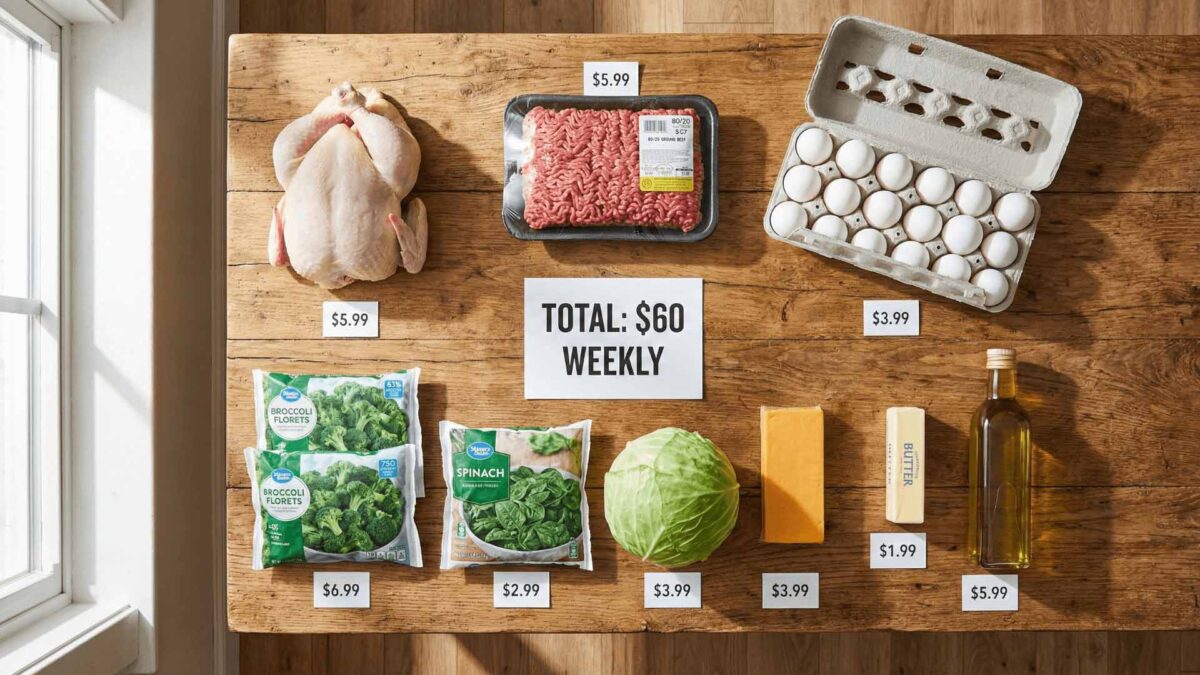
These basics show up in our complete keto food list—we’ve organized 200+ foods by carbs and cost so you can see what fits your budget before you shop.
Protein dominates your keto budget. Small changes here create massive savings.
Tip #1: Buy Whole Chickens, Not Chicken Breasts
The math:
- Boneless chicken breasts: $5-6/lb = $10-12 per meal for two people
- Whole chicken: $1.29-1.89/lb = $6-9 total for 4-5 meals
Your savings: $8-10 per chicken, multiple times monthly = $35-45/month
How to use it: Roast Sunday evening (season with salt, pepper, garlic powder, olive oil, 375°F for 90 minutes). Pick meat for meal prep. Save bones for bone broth.
Tip #2: Ground Beef 80/20 Beats Expensive Cuts
The math:
- Ribeye steak: $12-18/lb
- Ground beef 80/20: $3.99-4.99/lb
Both are zero-carb protein. Both keep you full. Ground beef costs 70% less and works in dozens of recipes.
Buy in bulk: Purchase 5-10 lbs when on sale, freeze in 1-lb portions. Lasts months.
Tip #3: Eggs Are Your Budget Superpower
The math:
- 18 eggs: $3-4
- Cost per egg: $0.17-0.22
- Protein per egg: 6g
Three eggs = 18g protein for $0.50-0.66. Nothing beats this protein-to-cost ratio.
Serving ideas: Scrambled with cheese, hard-boiled for snacks, omelets loaded with cheap vegetables, egg salad with mayo.
Tip #4: Frozen Fish Beats Fresh Every Time
The math:
- Fresh salmon: $12-16/lb
- Frozen salmon fillets: $6-8/lb
- Frozen tilapia/cod: $4-5/lb
Flash-frozen fish is nutritionally identical to fresh. You’re paying for convenience and marketing, not quality.
Pro tip: Thaw in refrigerator overnight. Season and bake at 400°F for 12-15 minutes. Tastes indistinguishable from fresh.
Tip #5: Canned Tuna and Chicken for Emergency Meals
The math:
- Canned tuna: $0.80-1.20 per can (4-5 oz protein)
- Rotisserie chicken (already cooked): $5-7 (multiple meals)
Keep 6-8 cans in your pantry. When you’re too tired to cook, dump tuna over spinach with olive oil and vinegar. Five-minute meal for under $2.
Halal tip: Source whole chickens, ground beef, and lamb from halal butchers when possible—many offer “family packs” with bulk discounts that rival conventional supermarket pricing, especially for grass-fed options.
Vegetable Budget Hacks (Save $8-12/Week)
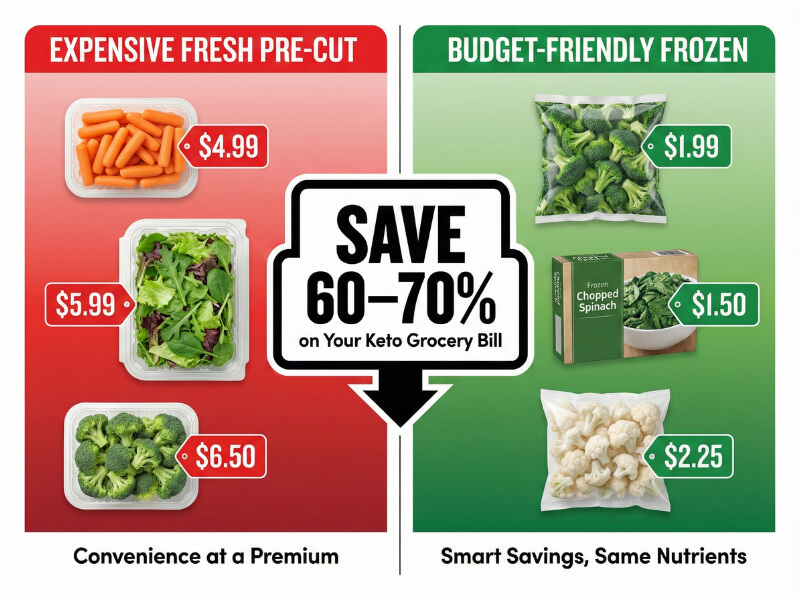
Batch-cooking these frozen vegetables on Sunday eliminates weekday stress—our keto meal prep guide shows exactly how to prep 5 days of vegetables in under 20 minutes.
Vegetables don’t need to destroy your budget. Strategic shopping cuts costs dramatically.
Tip #6: Frozen Vegetables Cost 60% Less Than Fresh
The math:
- Fresh broccoli florets: $3.99/lb (12 oz bag)
- Frozen broccoli: $1.29-1.79/lb (16 oz bag)
Frozen vegetables are picked at peak ripeness and flash-frozen within hours. Studies show frozen vegetables retain nutrients as well as or better than fresh produce that spent 7–10 days in transit and storage.
Buy these frozen: Broccoli, cauliflower, spinach, green beans, mixed stir-fry vegetables, Brussels sprouts.
Tip #7: Skip Pre-Cut, Pre-Washed, and “Convenience” Vegetables
The markup:
- Whole romaine lettuce: $1.49
- Pre-washed salad mix: $3.99-4.99 (same amount)
- Baby carrots: $2.99/lb
- Whole carrots: $0.79/lb
You’re paying $2-3 extra for someone to wash lettuce. That’s $8-12 weekly, $35-50 monthly.
Time investment: Five extra minutes chopping vegetables saves $400+ yearly.
Tip #8: Buy In-Season Produce Only
Seasonal pricing (examples):
- Summer: Zucchini $0.99/lb, bell peppers $1.29/lb
- Winter: Same vegetables $2.99-3.99/lb
Strategy: Build meals around whatever’s cheapest that week. Don’t shop with rigid meal plans—shop the sales, then decide meals.
Tip #9: Spinach and Cabbage Deliver Maximum Volume for Minimum Cost
Best value vegetables:
- Cabbage: $0.49-0.79 per head (lasts 2+ weeks)
- Spinach (large container): $2.99-3.99 (multiple meals)
- Romaine lettuce: $1.49 per head
One head of cabbage creates: Coleslaw (4 servings), sautéed cabbage with sausage (3 meals), stir-fry base (2 meals). Total cost: $0.79. Cost per serving: $0.09.
For complete net carb counts and serving sizes of all vegetables, reference our complete keto food list.
Smart Fat and Oil Purchases (Save $5-8/Month)
Fats are expensive—but they last months if you buy strategically.
Tip #10: Bulk Oil Purchase Saves 40-50%
The math:
- Small olive oil bottle (16 oz): $7-8 ($0.50/oz)
- Large olive oil bottle (68 oz): $18-22 ($0.26-0.32/oz)
Buy the largest bottle of olive oil, avocado oil, and coconut oil available. Store in cool, dark place. Lasts 6+ months.
Monthly savings: $5-8 by avoiding frequent small-bottle purchases.
Tip #11: Butter Beats Specialty “Keto” Fats
Skip MCT oil ($20-30/bottle), ghee ($10-14/jar), and “brain octane” oil ($25-35/bottle) initially.
What actually works: Regular butter ($3-4/lb) provides fat for cooking, flavor, and satiety. Works identically for keto purposes.
Upgrade later once you’re consistently in ketosis and budget allows.
Tip #12: Avocados When On Sale Only
Pricing pattern:
- Regular price: $1.49-1.99 each
- Sale price: $0.50-0.88 each
Avocados are keto-friendly but not mandatory. Buy 4-5 when on sale (check weekly ads). Skip when full price. You won’t miss them.
Alternative: Olives ($2-3/jar) deliver healthy fats at lower cost and last months in the fridge.
Dairy and Cheese Tactics (Save $6-10/Week)
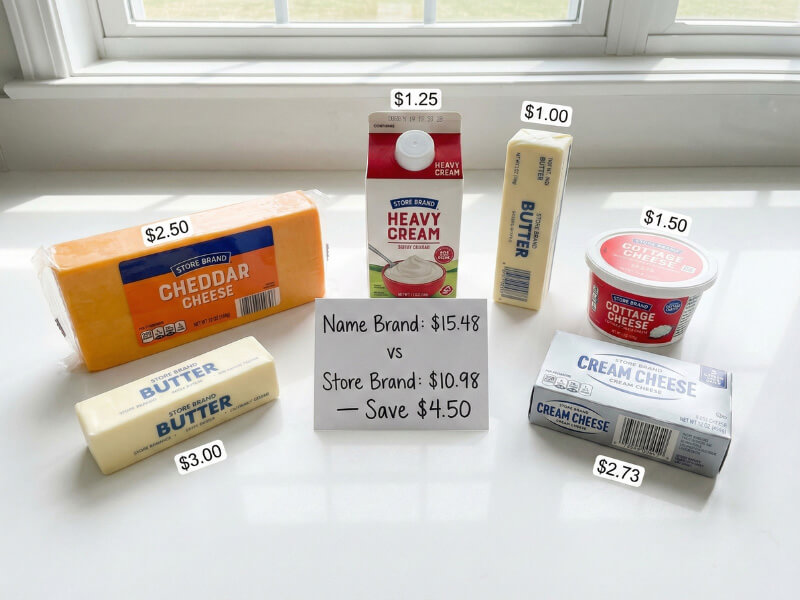
Tip #13: Store-Brand Dairy Tastes Identical
The markup for name brands:
- Tillamook cheddar: $6.99/lb
- Store-brand cheddar: $4.49/lb
- Difference: $2.50/lb for identical nutritional profile
Same for: Heavy cream, cream cheese, butter, mozzarella, cottage cheese.
Blind taste test: Most people can’t distinguish store-brand from premium. Save the $20-30 monthly and spend on protein instead.
Tip #14: Block Cheese Costs 40% Less Than Shredded
The math:
- Pre-shredded cheddar: $5.99/lb
- Block cheddar: $3.99-4.49/lb
Pre-shredded cheese includes anti-caking agents (adds carbs) and convenience markup.
Time investment: Two minutes with a box grater saves $2 per block. That’s $60/hour if you value your time.
Meal Planning and Prep Strategies (Save $15-25/Week)
This is where amateur budgeters lose money—not in grocery shopping, but in failing to use what they bought.
Tip #15: Cook Once, Eat 4-5 Times
The failed approach: Cook different meals nightly. By Wednesday you’re exhausted, order takeout ($15-20), groceries spoil.
The budget approach: Sunday meal prep session (2 hours):
- Roast whole chicken
- Brown 3 lbs ground beef with taco seasoning
- Roast two sheet pans of frozen vegetables
- Hard-boil 12 eggs
Result: 12-15 meals ready to microwave. Zero decisions. Zero takeout temptation. Groceries all get used.
Our comprehensive guide to keto meal prep shows exactly how to batch-cook these budget staples in under 2 hours every Sunday.
Tip #16: Build “Formula Meals” Not Complex Recipes
Complex recipe: Requires 15 ingredients, half used once, $40 total, 90 minutes cooking.
Formula meal: Protein + vegetable + fat + seasoning. Example: Ground beef + cauliflower rice + butter + taco seasoning. Total cost: $3-4. Time: 15 minutes.
Your rotation: Master 5-7 formula meals. Repeat weekly. Costs stay low, execution stays simple.
Tip #17: One-Pot Meals Minimize Waste
Budget-killer: Elaborate meals with multiple components. You cook rice (can’t eat it), make fancy sauce (half left over), buy specialty ingredients.
Budget-saver: Everything in one pot/pan.
- Skillet: Ground beef + diced bell peppers + onion + cheese + sour cream
- Slow cooker: Chicken thighs + salsa + cream cheese (shred after cooking)
- Sheet pan: Halal sausages + broccoli + olive oil (roast at 400°F for 25 minutes)
Fewer dishes = more likely to cook = less takeout waste.
Tip #18: Use Cheaper Cuts for Slow Cooker Meals
Expensive cuts: Chicken breasts, lean cuts, quality steak = dry when slow-cooked, waste of money.
Cheap cuts perfect for slow cooking:
- Chicken thighs (bone-in): $0.99-1.49/lb
- Beef chuck roast: $3.99-5.99/lb
- Lamb shoulder: $2.99-3.99/lb
All become tender and delicious after 6-8 hours low heat. Fall-apart texture. Superior to expensive cuts for this method.
Halal note: Lamb shoulder is particularly excellent for slow cooking—rich flavor, becomes fall-apart tender, and widely available at halal butchers with competitive bulk pricing.
What NOT to Buy (Save $20-35/Month)
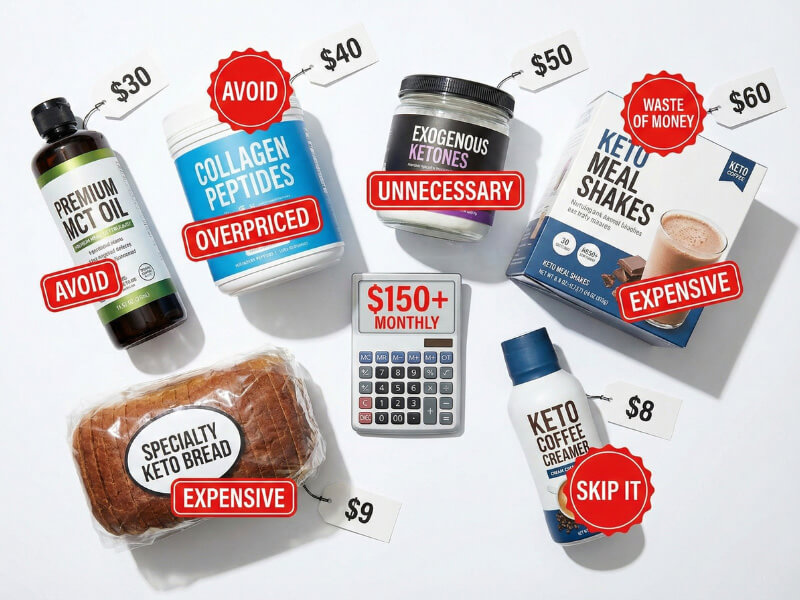
These “keto essentials” waste money without adding value.
Tip #19: Skip These Overpriced “Keto” Products
Don’t buy initially:
❌ MCT oil ($25-35/bottle) – Butter works fine
❌ Collagen powder ($30-40/container) – Eat protein instead
❌ Exogenous ketones ($40-60/container) – Your body makes ketones free
❌ “Keto coffee creamers” ($6-8/bottle) – Heavy cream costs $3-4
❌ Keto meal replacement shakes ($50-70/box) – Eat real food
❌ Pre-made fat bombs ($8-12/package) – Make your own for $2
Savings: $20-35 monthly by avoiding unnecessary supplements. Buying unnecessary supplements is one of the common keto mistakes that drains budgets without improving results.
What actually matters: Staying under 20g net carbs daily. Everything else is marketing.
Tip #20: Avoid “Low-Carb” Specialty Products Until Necessary
Expensive specialty items:
- Almond flour: $10-12/lb (bake occasionally, not weekly)
- Keto bread: $7-9/loaf (just skip bread)
- Keto tortillas: $5-7/package (lettuce wraps work)
- Sugar-free syrups: $6-8/bottle (use stevia in coffee)
Reality: Most successful keto followers never buy these products. They eat meat, eggs, vegetables, cheese, and fat. That’s the whole diet.
Strategy: Master basic keto for 30-60 days first. Add specialty items later only if genuinely missing them.
Sample $60 Budget Weekly Meal Plan
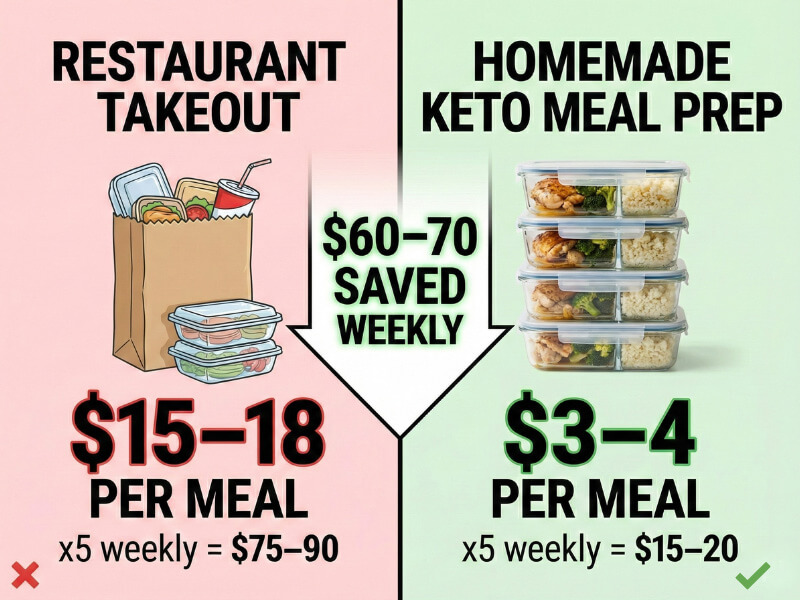
Proof it works—actual grocery list:
Proteins ($28):
- 1 whole chicken (4-5 lbs): $6-9
- 3 lbs ground beef 80/20: $12-15
- 18 eggs: $3-4
- 2 cans tuna: $2
Vegetables ($11):
- 2 bags frozen broccoli: $3
- 1 bag frozen spinach: $2
- 1 head cabbage: $0.79
- 2 bell peppers (on sale): $2
- 1 container romaine: $1.49
- 1 bag frozen cauliflower rice: $1.99
Fats ($8):
- Butter (1 lb): $3.50
- Olive oil (already have): $0
- 2 avocados (on sale): $1.50
- 1 bag pecans: $3
Dairy ($10):
- Block cheddar (1 lb): $4.49
- Heavy cream (1 pint): $3
- Cream cheese (8 oz): $2.50
Pantry/Seasonings ($3):
- Taco seasoning: $1
- Garlic powder: $1.50
- Salt/pepper (already have): $0
Total: $60
This creates: 14 dinners (2 weeks if eating once daily OMAD, or 1 week if eating twice daily).
Cost per meal: $4.29 (eating twice daily) or $2.14 (OMAD)
Compare to restaurant meals ($12-18) or fast food ($8-12). You’re saving $150-200+ monthly. Reference our complete keto food list for detailed nutritional information on every ingredient in this budget meal plan.
Frequently Asked Questions
Is keto on a budget actually cheaper than eating regular food?
Yes—if you cook at home. Whole chickens, ground beef, eggs, frozen vegetables, and block cheese cost less per meal than bread, pasta, and processed foods. The savings come from eliminating expensive convenience foods, takeout, and packaged snacks. However, if you’re currently eating $0.50 ramen noodles daily, keto will cost more. If you’re eating a typical American diet with restaurant meals 3-4 times weekly, keto on a budget saves $100-200 monthly.
Can I do keto on a budget without buying organic or grass-fed?
Absolutely. Conventional chicken, beef, and vegetables work perfectly for ketosis. Organic and grass-fed are nutritional upgrades, not requirements. Your body enters ketosis from macronutrient ratios (fat, protein, carbs), not food quality. Buy conventional initially, upgrade to grass-fed butter and wild-caught salmon later when budget allows—those two provide the biggest nutritional return if you want to selectively upgrade.
What if I can’t afford $60 weekly right now?
Focus on the cheapest proteins: eggs ($0.17 each), canned tuna ($1 per can), whole chicken ($6-9 for 4-5 meals). Buy only frozen vegetables ($1.29-1.79 per bag). Use butter and olive oil you already have. Skip cheese initially if needed. A bare-bones week costs $35-45: dozen eggs ($3), 2 lbs ground beef ($8), whole chicken ($7), 3 bags frozen broccoli ($4), butter ($3.50), bag of spinach ($2). That’s $27.50 for 10-12 meals.
How do I handle keto on a budget with a family?
Multiply the base plan by number of people eating keto. For a family of four, the $60 weekly plan becomes $240 monthly ($60/week). However, bulk purchasing creates additional savings: 10 lb ground beef ($35-40 vs $48-50), 5 dozen eggs ($10-12 vs $15-18), larger frozen vegetable bags. Feed four people for $180-200 weekly with smart bulk buying and meal prep. Kids can add rice or potatoes to their portions if not doing keto.
Where can I find halal meat on a budget?
Check ethnic grocery stores and halal butchers—they often have better prices than mainstream supermarkets, especially for bulk purchases. Many halal butchers offer “family packs” with whole chickens, ground beef, and lamb at discounted rates. Online halal meat delivery services sometimes offer bulk subscription discounts. If local halal meat isn’t available affordably, all fish and seafood are universally halal, and eggs are your most budget-friendly protein at $0.17 each regardless of source.
Conclusion
Keto on a budget isn’t about deprivation—it’s about strategy.
You don’t need expensive specialty products. You don’t need grass-fed everything. You don’t need complicated recipes with 20 ingredients.
You need: Whole chickens. Ground beef. Eggs by the dozen. Frozen vegetables. Block cheese. Butter. Simple staples prepared efficiently.
The difference between $150/week and $60/week keto isn’t sacrifice—it’s eliminating waste. Buying whole chickens instead of boneless breasts saves $35+ monthly. Choosing frozen over fresh vegetables saves $30-40 monthly. Skipping unnecessary “keto” supplements saves another $25-35 monthly.
Those three changes alone: $90-110 monthly savings.
Action steps:
- Print the $60 weekly meal plan above. Shop it exactly this week. Prove to yourself it works.
- Meal prep Sunday evening. Two hours of cooking prevents $50-80 of takeout failures during the week.
- Track what spoils. If you throw away $15 of vegetables weekly, that’s $60+ monthly. Buy less fresh, more frozen.
- Master 5-7 formula meals. Rotate them. Consistency beats variety when you’re on a budget.
Keto works at any budget. Make it work for yours.
📥 FREE DOWNLOAD: $60 WEEKLY KETO MEAL PLAN PDF
Get the complete shopping list, meal prep instructions, and 14 budget-friendly recipes using these exact money-saving strategies.
Print it. Shop it. Save $100+ monthly.
We respect your privacy. Unsubscribe anytime.
Want weekly budget keto tips + meal plans? Join 500+ readers getting money-saving strategies every Thursday. Subscribe to our free newsletter →
