
Starting a keto diet can feel overwhelming. You’ve probably heard people rave about their weight loss results, but you’re not sure where to begin. Should you count every carb? What about fat? And what the heck is “ketosis” anyway?
Here’s the truth: the keto diet for beginners doesn’t have to be complicated. With the right guidance, you can start seeing results in your first week—without the confusion, without the overwhelm, and definitely without starving yourself.
This complete guide gives you everything you need: a simple 7-day meal plan, a beginner-friendly food list, macro breakdowns, and practical tips to avoid the dreaded “keto flu.” By the end of this week, you’ll understand exactly how keto works and how to make it fit your lifestyle.
Ready to transform how your body burns energy? Let’s dive in.
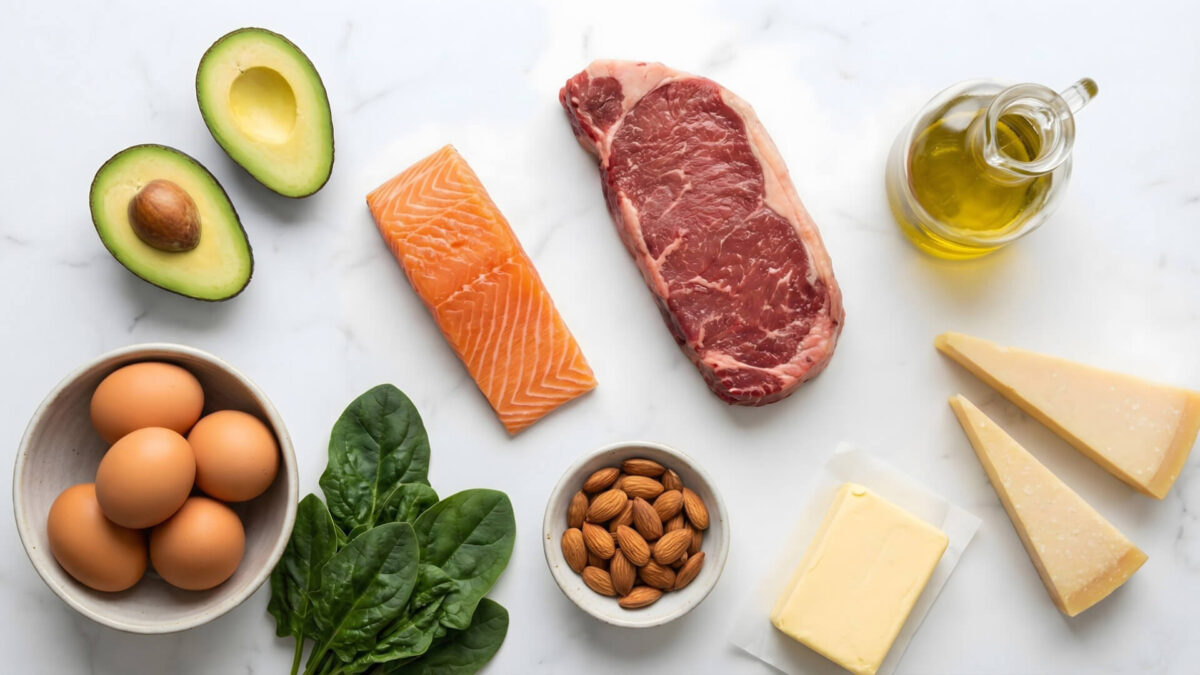
What Exactly Is the Keto Diet?
The keto diet—short for ketogenic diet—is a low-carb, high-fat eating approach that changes how your body creates energy.
On a standard diet, your body runs on glucose from carbohydrates. You eat bread, pasta, or fruit, your blood sugar spikes, and you get a quick burst of energy followed by a crash. Sound familiar?
The keto diet flips this entirely.
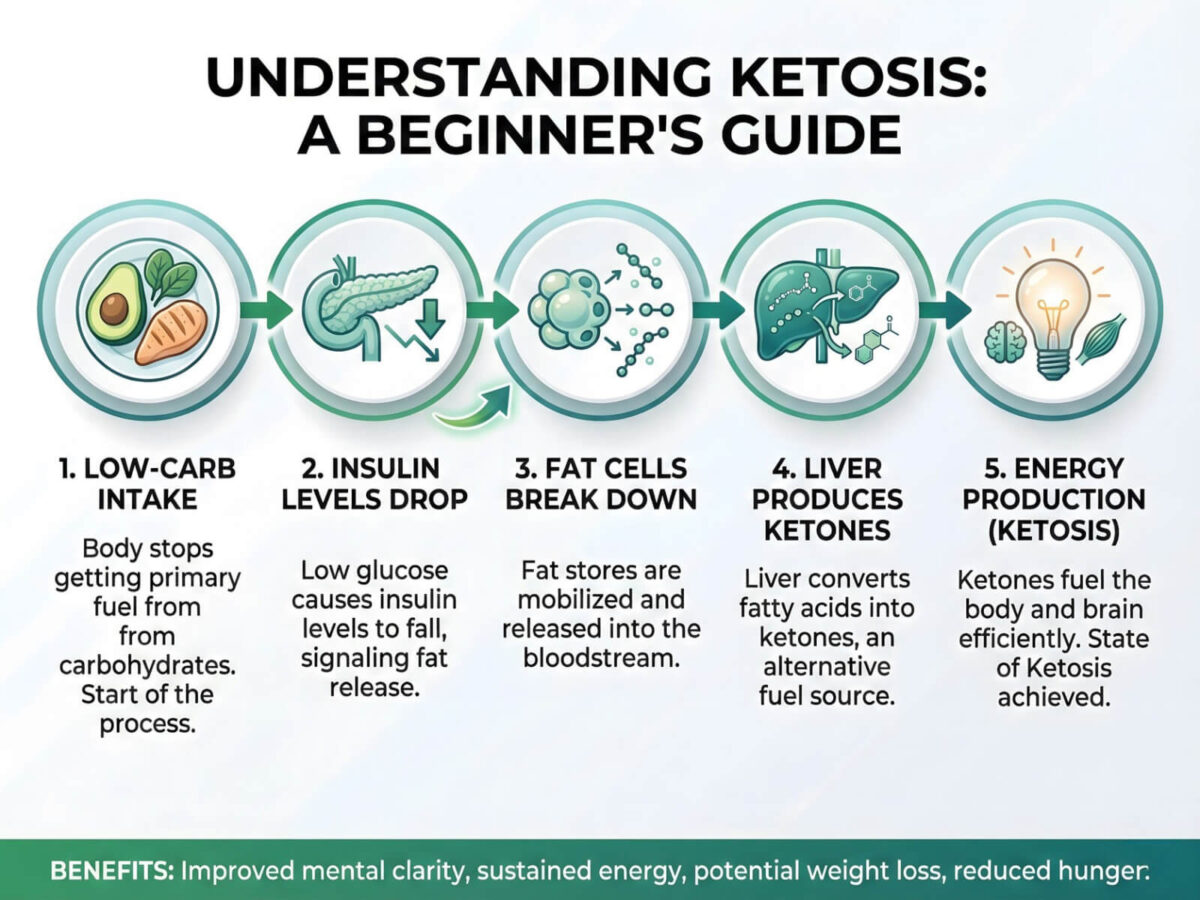
When you drastically reduce carbs (typically to 20-50 grams per day), your body runs out of glucose. Your insulin levels drop. Your liver starts breaking down fat—both from food and your body’s fat stores—into molecules called ketones.
These ketones become your new primary fuel source. Your brain, muscles, and organs run on ketones instead of glucose. This metabolic state is called ketosis, and it’s the goal of the keto diet.
For a deeper understanding of what the keto diet is and how it works, check out our complete guide.
Think of it like switching your car from regular gas to premium fuel. Your body becomes a fat-burning machine.
How the Keto Diet Helps You Lose Weight
The keto diet for beginners works so well for weight loss because of several powerful mechanisms:
1. Appetite Control
Fat and protein keep you satisfied for hours. You’ll naturally eat less because you’re not constantly hungry or craving snacks between meals.
2. Fat Burning
In ketosis, your body becomes efficient at burning stored fat for energy. That stubborn belly fat? Your body starts using it as fuel.
3. Lower Insulin Levels
When you cut carbs, insulin drops and your kidneys release sodium and water. Lower insulin makes it easier for your body to access and burn fat stores instead of storing more fat.
4. Water Weight Loss
You’ll lose 5-10 pounds in your first week as your body releases water stored with glycogen. This early success motivates you to keep going.
5. Stable Energy
No more afternoon crashes. Ketones provide steady, consistent energy throughout the day.
Research shows that people on a keto diet lose weight faster than those on traditional low-fat diets—especially around the midsection where dangerous visceral fat accumulates.
Ready to Start Keto the Easy Way?
Get your FREE 7-Day Keto Meal Plan with complete grocery lists, macro breakdowns, and easy recipes designed for beginners.
We respect your privacy. Unsubscribe anytime.
Understanding Keto Macros for Beginners
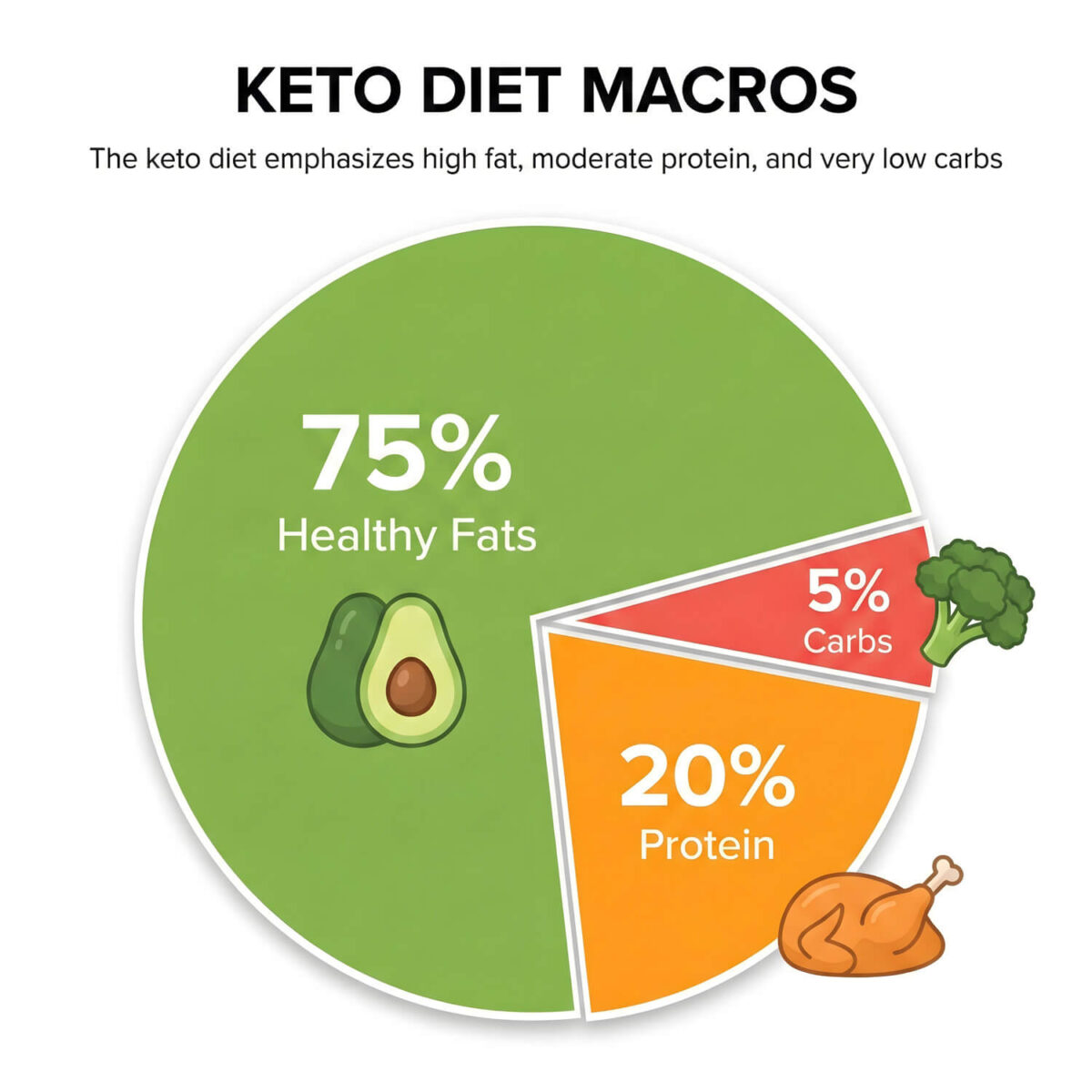
Success on the keto diet requires hitting specific macronutrient ratios. Learn more about keto diet macros in our beginner’s explanation. Learn more about keto diet macros in our beginner’s explanation. Here’s your beginner-friendly breakdown:
Fat: 70-80% of Daily Calories
Fat is your primary fuel source on keto. This is a high-fat diet by design.
Focus on healthy fats:
- Avocados and avocado oil
- Extra virgin olive oil
- Coconut oil and MCT oil
- Grass-fed butter and ghee
- Fatty fish like salmon and mackerel
- Nuts and seeds (almonds, macadamias, walnuts)
- Full-fat cheese and cream
Don’t fear fat. Your body needs it for energy, hormone production, and nutrient absorption.
Protein: 20-25% of Daily Calories
Protein maintains muscle mass, but too much can kick you out of ketosis. Your body converts excess protein into glucose through gluconeogenesis.
Choose quality proteins:
- Grass-fed beef and lamb
- Chicken and turkey
- Eggs (nature’s perfect food)
- Fatty fish and seafood
- Full-fat Greek yogurt (in moderation)
A simple rule: eat a palm-sized portion of protein with each meal.
Carbs: 5-10% of Daily Calories
This is non-negotiable. To achieve ketosis, keep carbs very low—typically 20-50 grams of net carbs per day.
Most beginners should start at 20-25 grams to ensure success.
Understanding Net Carbs
Net carbs are what count on keto:
Net Carbs = Total Carbs – Fiber
Fiber doesn’t spike blood sugar or prevent ketosis. That’s why fibrous vegetables like broccoli and spinach are keto staples.
Example: 1 cup of broccoli has 6g total carbs and 2.4g fiber = 3.6g net carbs ✓
Keto Diet Food List for Beginners
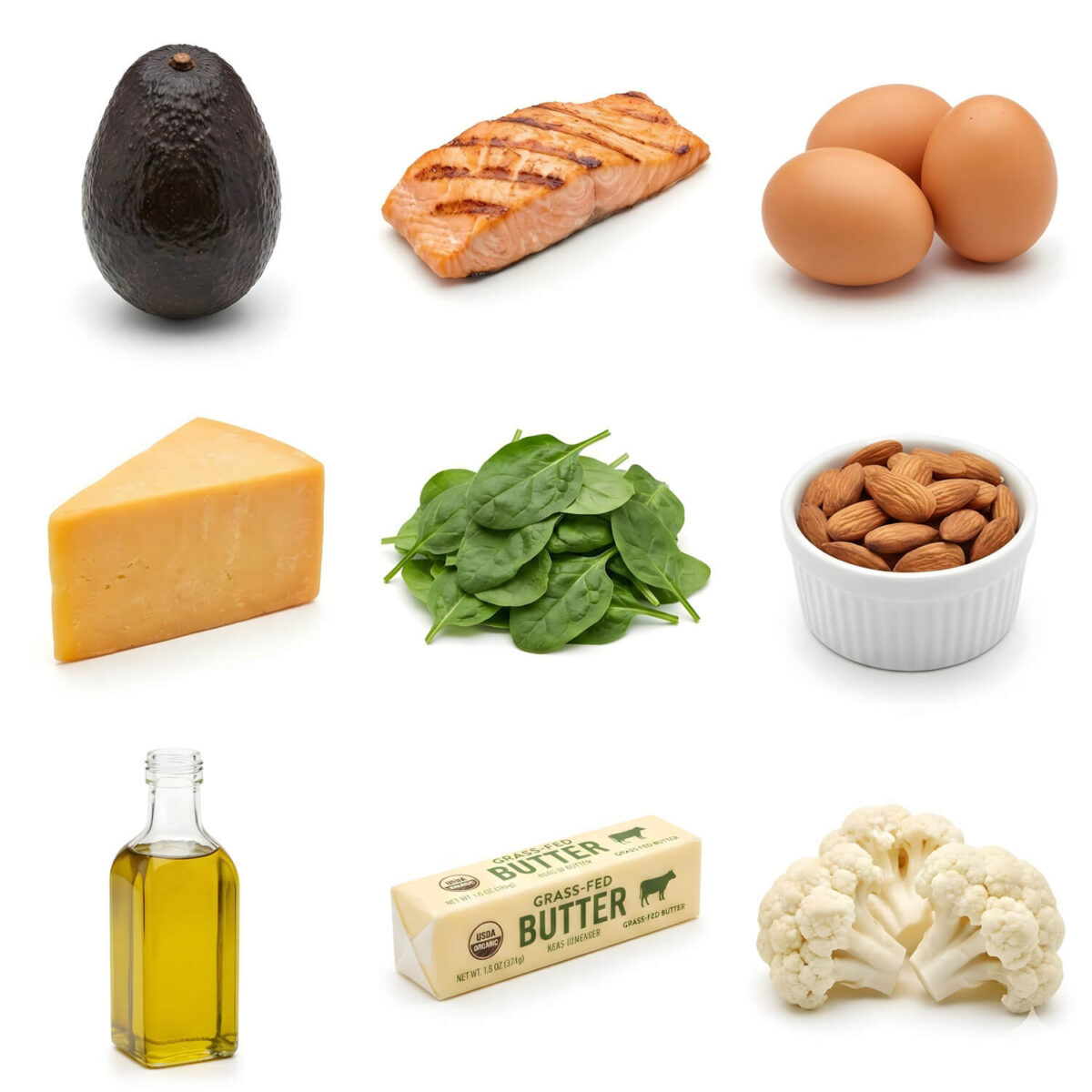
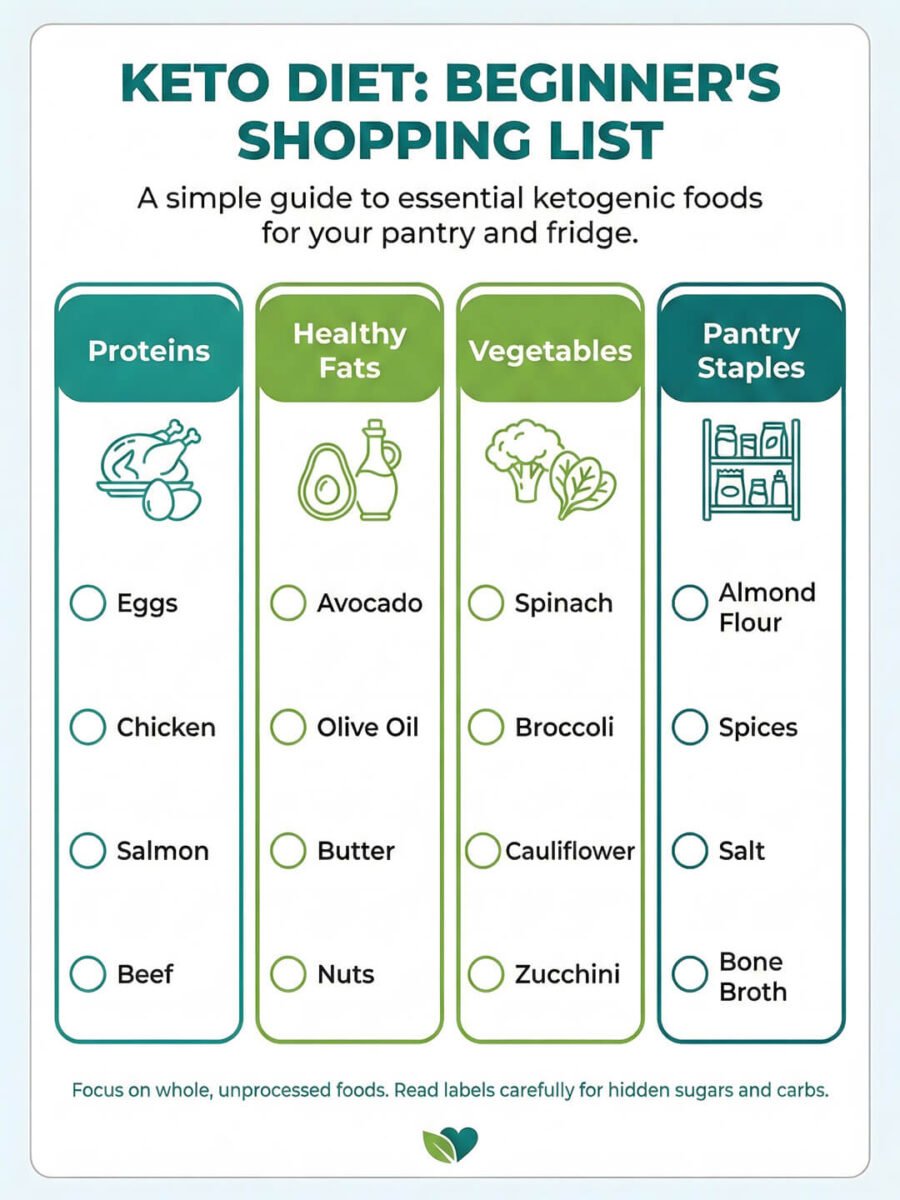
Knowing what to eat makes starting keto simple. Here’s your complete food list.
Keto-Friendly Foods (Eat These)
Healthy Fats & Oils:
- Avocado oil, olive oil, coconut oil
- Butter, ghee, beef tallow
- MCT oil (great for coffee)
Proteins:
- Grass-fed beef, lamb, chicken, turkey
- Fatty fish: salmon, mackerel, sardines
- Eggs (as many as you want)
- Seafood: shrimp, crab, lobster
Low-Carb Vegetables:
- Leafy greens: spinach, kale, arugula, lettuce
- Cruciferous: broccoli, cauliflower, Brussels sprouts
- Others: zucchini, asparagus, bell peppers, mushrooms, cucumber
Full-Fat Dairy:
- Hard cheeses: cheddar, mozzarella, parmesan, gouda
- Heavy cream, sour cream
- Full-fat Greek yogurt (watch portions)
- Cream cheese
Nuts & Seeds (in moderation):
- Macadamias, pecans, walnuts, almonds
- Chia seeds, flaxseeds, pumpkin seeds
- Nut butters (no added sugar)
Beverages:
- Water (your best friend)
- Black coffee, tea (unsweetened)
- Bone broth, sparkling water
Foods to Avoid on Keto
Grains & Starches:
- Bread, pasta, rice, cereal, oats
- Wheat products, corn, quinoa
Sugary Foods & Drinks:
- Soda, juice, sports drinks
- Candy, ice cream, cake, cookies
- Most fruits (except small portions of berries)
Legumes:
- Beans, lentils, chickpeas
Root Vegetables:
- Potatoes, sweet potatoes
- Carrots (in large amounts), beets, parsnips
Processed “Low-Fat” Foods:
- Often loaded with hidden sugars
- Check labels carefully
Unhealthy Fats:
- Processed vegetable oils: canola, soybean, corn oil
- Trans fats, margarine
Your 7-Day Keto Meal Plan for Beginners
This simple meal plan takes the guesswork out of your first week. Each day includes three meals plus one snack. Adjust portions based on your hunger—keto naturally controls appetite.
Day 1: Starting Strong
Breakfast: Scrambled eggs with cheese and half an avocado
Lunch: Grilled chicken salad with full-fat ranch dressing
Dinner: Garlic butter steak with roasted asparagus
Snack: Handful of almonds
Day 2: Finding Your Rhythm
Breakfast: Keto coffee (coffee with MCT oil and butter)
Lunch: Tuna salad with mayo wrapped in lettuce leaves
Dinner: Baked salmon with cauliflower mash
Snack: Cheese cubes and olives
Day 3: Building Confidence
Breakfast: Spinach and mushroom omelet with feta cheese
Lunch: Grilled chicken kebabs with cucumber yogurt sauce
Dinner: Zucchini noodles with creamy garlic chicken
Snack: Celery sticks with natural almond butter
Day 4: Getting Comfortable
Breakfast: Full-fat Greek yogurt with chia seeds and crushed walnuts
Lunch: Beef lettuce wraps with avocado and sour cream
Dinner: Spicy grilled shrimp with broccoli sautéed in olive oil
Snack: Hard-boiled egg with macadamia nuts
Day 5: Feeling Great
Breakfast: Keto pancakes (almond flour) topped with butter
Lunch: Chicken shawarma salad with olive oil and lemon
Dinner: Baked kofta with green beans in tomato sauce
Snack: Cheese stick with cucumber slices
Day 6: Almost There
Breakfast: Keto smoothie (almond milk, spinach, avocado, protein powder)
Lunch: Egg salad in lettuce wraps
Dinner: Grilled turkey patties with sautéed zucchini
Snack: Mixed nuts (small portion)
Day 7: You Made It!
Breakfast: Hard-boiled eggs with half an avocado
Lunch: Spicy grilled chicken thighs with cauliflower rice
Dinner: Pan-fried fish fillet with roasted Brussels sprouts
Snack: Strawberries with unsweetened whipped cream
Want This Meal Plan in Printable Format?
Download your FREE 7-Day Keto Meal Plan with complete grocery lists, macro calculations, and easy prep instructions.
We respect your privacy. Unsubscribe anytime.
How to Avoid the Keto Flu
During your first week on the keto diet for beginners, you might experience the “keto flu.” Symptoms include:
- Fatigue and low energy
- Headaches
- Irritability or brain fog
- Muscle cramps
- Nausea
This is temporary and completely preventable. Here’s how:
1. Prioritize Electrolytes
When you cut carbs, insulin drops and your kidneys release sodium and water. You lose electrolytes rapidly.
Sodium: 3,000-5,000mg daily
- Drink bone broth
- Add sea salt to your water
- Don’t be afraid to salt your food
Potassium: 3,000-4,000mg daily
- Eat avocados, spinach, salmon
- Consider a supplement
Magnesium: 300-400mg daily
- Take a supplement (magnesium glycinate)
- Eat pumpkin seeds, almonds, spinach
2. Stay Hydrated
Drink at least 8-10 glasses of water daily. More if you exercise. Keep a water bottle with you and sip throughout the day.
3. Don’t Restrict Calories
Eat enough fat to feel satisfied. Your body is adapting—don’t stress it further by under-eating.
4. Rest Adequately
Get 7-8 hours of quality sleep. Take it easy the first week. Avoid intense workouts initially.
Most keto flu symptoms disappear within 3-7 days. Push through—it gets much better!

Common Keto Mistakes Beginners Make
Avoid these pitfalls to ensure success:
1. Not Tracking Macros
At least initially, track your food. Use an app like Cronometer or Carb Manager. You’d be surprised where carbs hide.
2. Eating Too Much Protein
More isn’t always better. Excess protein converts to glucose and can prevent ketosis.
3. Forgetting Electrolytes
This is the #1 reason people feel terrible on keto. Supplement sodium, potassium, and magnesium daily.
4. Choosing Low-Quality Fats
Avoid processed vegetable oils. Stick to olive oil, avocado oil, coconut oil, butter, and animal fats.
5. Giving Up Too Soon
Your body needs 2-4 weeks to fully adapt. The first week is the hardest. Push through!
6. Eating Too Many “Keto” Products
Packaged “keto” snacks are often highly processed. Focus on whole, real foods.
7. Not Meal Prepping
Winging it leads to poor choices. Spend Sunday prepping proteins and vegetables for the week.
Tips for Long-Term Keto Success
Meal Prep Is Your Secret Weapon
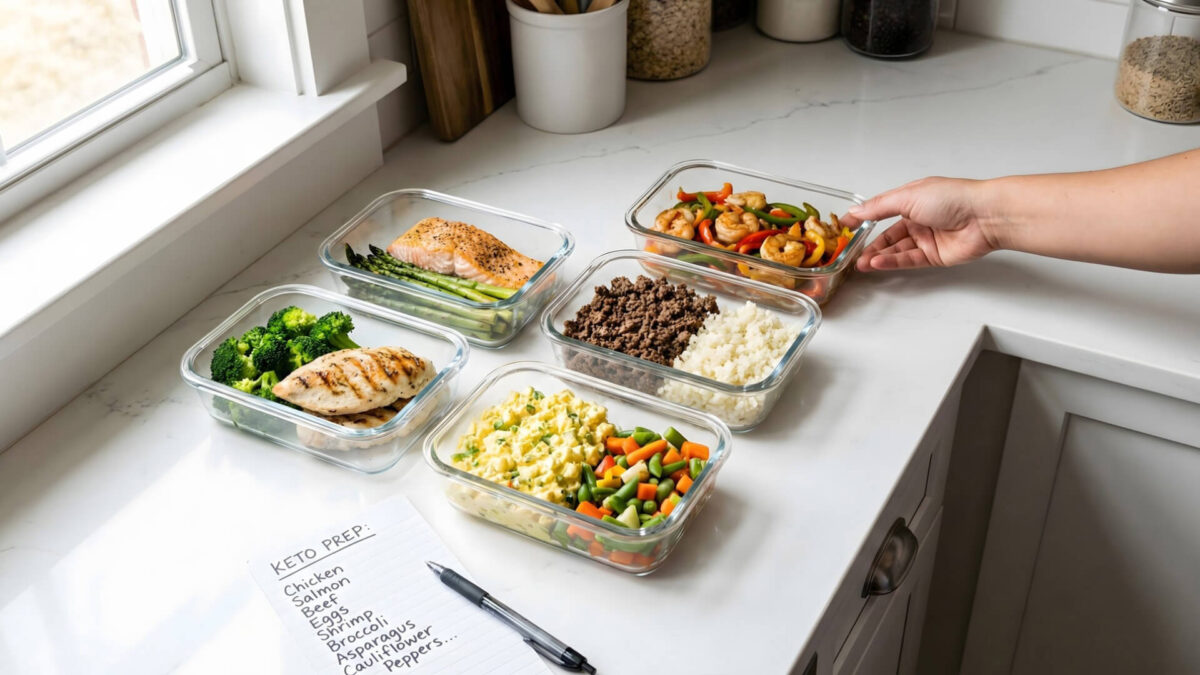
Batch cook on Sundays. Grill several chicken breasts, hard-boil a dozen eggs, chop vegetables. Future you will thank you.
Track Your Food Initially
Use an app for at least the first month. You’ll learn portion sizes and where carbs hide in foods.
Find Your Community
Join online keto groups or find a friend doing keto. Support makes a massive difference.
Don’t Stress About Perfection
Some days will be easier than others. One high-carb meal isn’t the end of the world. Just get back on track.
Listen to Your Body
Not hungry? Don’t force yourself to eat. Truly hungry? Eat more fat and protein.
Stay Educated
Read success stories, follow keto blogs, learn from others. Knowledge keeps you motivated.
What to Expect: Your First Week on Keto
Understanding what’s normal helps you stay committed.
Days 1-2: The Adjustment
You might feel fine or slightly tired. Your body is depleting glycogen stores. Drink extra water.
Days 3-4: The Challenge
This is when keto flu might hit. Follow the electrolyte protocol religiously. Push through—you’re almost there.
Days 5-7: The Breakthrough
Energy returns—often stronger than before. Mental fog lifts. Hunger naturally decreases. You’ll feel the difference.
Weight Loss Expectations
Week 1: 2-10 pounds (mostly water weight)
Week 2-4: 1-2 pounds per week
Long-term: 0.5-2 pounds per week
Remember, slow and steady wins the race. Focus on how you feel, not just the scale.
Beyond Week One: Your Keto Journey Continues
After your first week, here’s what comes next:
Keep tracking for at least another week to solidify good habits.
Experiment with recipes to keep meals interesting. Keto doesn’t have to be boring.
Test ketone levels if you’re curious (though it’s not necessary for success).
Pay attention to NSVs (non-scale victories): better sleep, clearer skin, improved mood, stable energy.
Gradually add variety while staying within your carb limit.
Join a community for ongoing support and motivation.
Start Your Keto Journey Today!
Get your FREE 7-Day Keto Meal Plan with:
✓ Complete meal-by-meal guide
✓ Grocery shopping list
✓ Easy 30-minute recipes
✓ Macro breakdowns for each meal
Join 1,000+ people who’ve started keto the right way!
We respect your privacy. Unsubscribe anytime.
Frequently Asked Questions
How long does it take to get into ketosis?
Most beginners enter ketosis within 2-4 days of restricting carbs to under 50 grams per day. However, full fat-adaptation (where your body becomes efficient at burning fat) takes 2-4 weeks. You can test ketosis using urine strips, blood meters, or breath analyzers, but physical signs like increased energy, reduced hunger, and mental clarity are reliable indicators.
To understand the complete ketosis process, read our detailed guide on how ketosis works.
Can I eat fruit on the keto diet?
Most fruits are too high in carbs for the keto diet for beginners, but small portions of berries are acceptable. A quarter cup of raspberries (1.5g net carbs), blackberries (3g net carbs), or strawberries (2g net carbs) can fit into your daily carb limit. Avoid high-sugar fruits like bananas, apples, oranges, and grapes as they’ll quickly exceed your carb allowance and prevent ketosis.
Do I need to count calories on keto?
While calorie counting isn’t mandatory on the keto diet for beginners, it can help with weight loss goals. Many people naturally eat fewer calories on keto due to increased satiety from fat and protein. However, if your weight loss stalls after the first month, tracking calories alongside macros can help identify issues. Focus on eating until satisfied, not stuffed, and let your body’s natural hunger signals guide you.
What should I do if I experience keto flu?
The keto flu is temporary and preventable. Immediately increase your electrolyte intake: consume 3,000-5,000mg sodium (drink bone broth, add salt to water), 3,000-4,000mg potassium (eat avocados, spinach, salmon), and 300-400mg magnesium (take a supplement). Drink 8-10 glasses of water daily, eat enough fat to feel satisfied, and get adequate rest. Most symptoms disappear within 3-7 days as your body adapts.
How much weight can I lose in my first month on keto?
Weight loss on the keto diet for beginners varies by individual. Expect to lose 5-10 pounds in the first week (mostly water weight), then 1-2 pounds per week afterward. First-month totals typically range from 8-15 pounds. Factors affecting weight loss include starting weight, adherence to macros, exercise level, sleep quality, and individual metabolism. Focus on consistency and non-scale victories like improved energy and reduced cravings.
Your Keto Journey Starts Now
The keto diet for beginners doesn’t have to be overwhelming. Take it one day at a time. Focus on eating real, whole foods. Be patient with yourself as your body adjusts.
This isn’t just about losing weight—it’s about discovering a sustainable way of eating that makes you feel amazing. You’re not starving yourself. You’re not counting every calorie. You’re simply teaching your body to burn fat instead of sugar.
The first week is the hardest. But once you push through, you’ll understand why millions of people swear by keto. The mental clarity. The steady energy. The effortless appetite control. The results speak for themselves.
You’ve got everything you need to succeed: a complete meal plan, a comprehensive food list, and practical strategies to avoid common pitfalls. Now it’s time to take action.
Your transformation begins with a single decision. Make today the day you start.