
INTRODUCTION
Shopping for keto shouldn’t feel like decoding a nutrition label in a foreign language.
You’re standing in the grocery aisle. Confused. Is cheese okay? How much? What about those “keto-friendly” bars? Greek yogurt – yes or no? Your phone’s open to three different articles that all say different things.
Here’s what nobody tells you upfront: keto isn’t about memorizing a thousand rules. It’s about knowing which foods keep you in fat-burning mode and which ones silently kick you out.
The difference between success and frustration? A clear food list you actually trust.
This isn’t another vague “eat this, not that” guide. We’re breaking down 200+ foods with specific net carb counts, preparation tips, and portion guidance. Everything organized by category. Nothing left to guesswork. And yes—completely halal-friendly options included throughout.
You’ll get the meats, seafood, vegetables, fruits (yes, some work), fats, oils, dairy, nuts, and even the sneaky foods that seem keto but aren’t. Plus a free downloadable PDF you can take shopping.
No more standing in Whole Foods Googling “are carrots keto?”
Let’s build your ultimate keto food list.
🎁 FREE DOWNLOAD: PRINTABLE KETO FOOD LIST PDF
Want this entire keto food list in a printer-friendly format?
Grab your free PDF with all 200+ foods organized by category, complete with net carb counts and shopping tips. Perfect for your wallet or fridge.
We respect your privacy. Unsubscribe anytime.
Understanding Net Carbs: The Only Number That Matters
Before diving into specific foods, you need to understand the metric that makes or breaks keto success.
Net carbs. Not total carbs.
Here’s why this distinction changes everything.
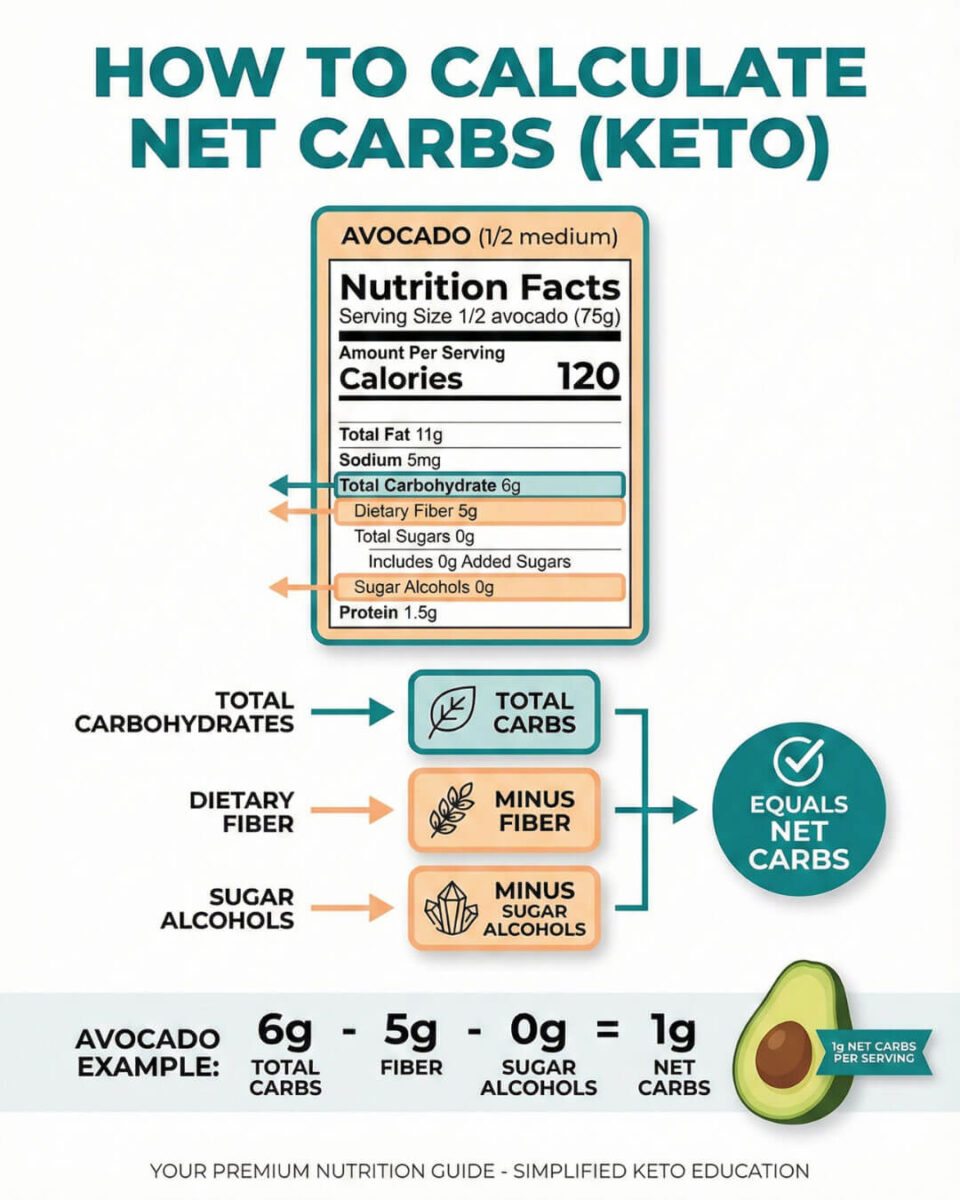
Total carbs include fiber and sugar alcohols—neither of which significantly impact blood sugar or ketosis according to research. Your body can’t digest fiber. It passes through. Sugar alcohols (like erythritol) are mostly excreted unchanged.
The formula is simple:
Net Carbs = Total Carbs – Fiber – Sugar Alcohols (most types)
An avocado might show 12g total carbs on the label. But it contains 10g of fiber. So net carbs? Just 2g. That’s keto gold.
This is how vegetables with seemingly high carb counts stay keto-friendly. A cup of raw spinach has 1.1g total carbs but 0.7g fiber. Net carbs: 0.4g. Basically nothing.
Your daily target: Keep net carbs under 20-25 grams to guarantee ketosis, which typically happens within 2-7 days once you understand how long it takes to enter ketosis. Some people can go higher (30-50g) once fat-adapted, but start conservative.
Every food in this keto food list shows net carbs, not total. This is the number you track.
Master this concept and the rest becomes clear.
KETO-FRIENDLY PROTEINS: THE FOUNDATION
Protein forms the cornerstone of every keto meal. But not all proteins are created equal on this diet.
Red Meat (Zero Carbs, High Satiety)
Fatty cuts win on keto. Don’t fear the fat.
Best Choices:
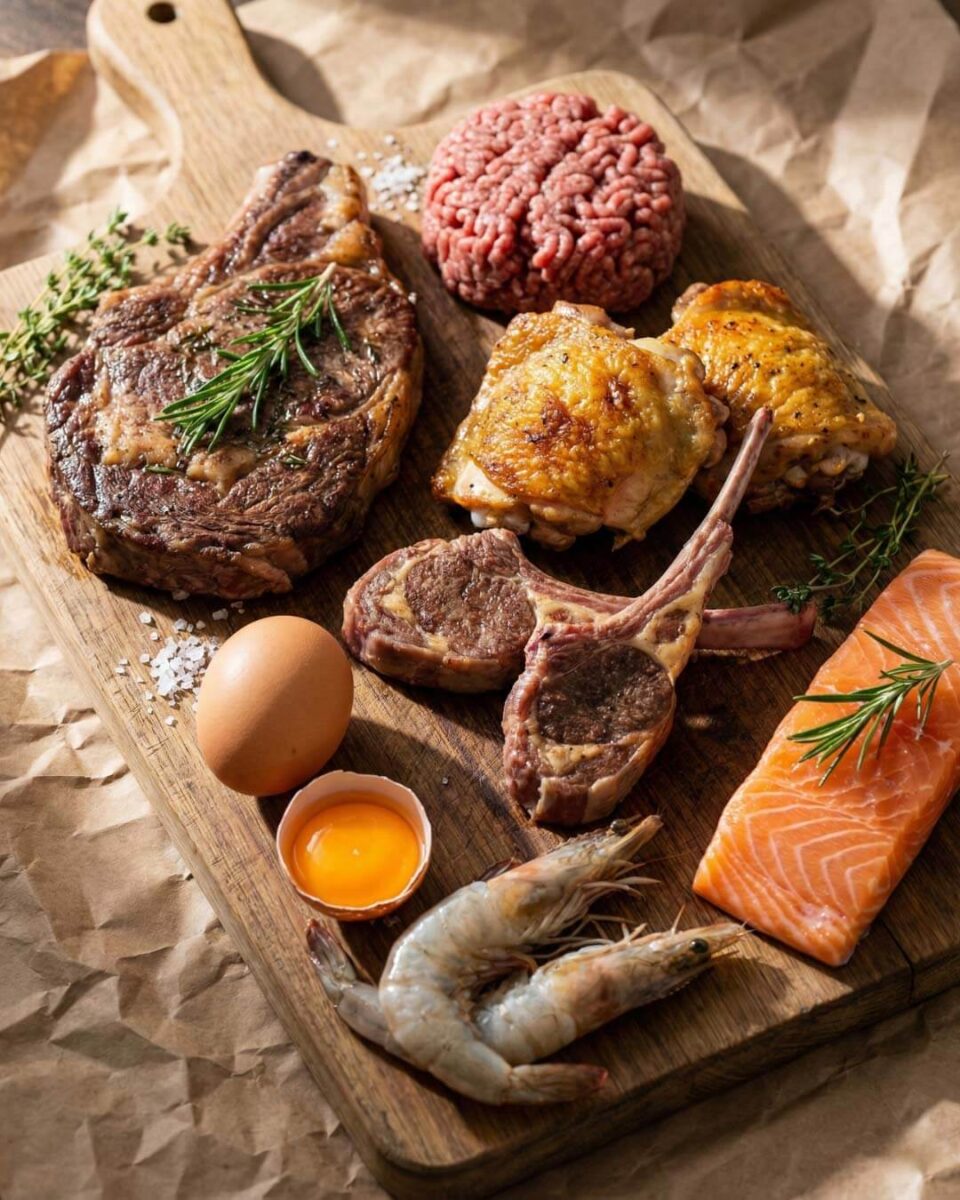
- Beef ribeye (0g net carbs) – Marbling = flavor + satiety
- Ground beef 80/20 (0g) – Perfect fat ratio for keto
- Beef chuck roast (0g) – Ideal for slow cooking
- Lamb chops (0g) – Rich, satisfying, naturally fatty
- Lamb shoulder (0g) – Budget-friendly for stews
- Grass-fed beef (0g) – Higher omega-3s if available
- Beef short ribs (0g) – Ultimate comfort food
- Goat meat (0g) – Lean protein, halal staple
Serving guidance: 4-6 oz per meal (about the size of your palm). The fattier the cut, the better for keto macros.
Halal note: Source from your local halal butcher. Quality grass-fed options often available. Build your keto success on these excellent protein sources.
Poultry (Zero Carbs, Versatile)
Chicken and turkey work perfectly. Prioritize dark meat and skin for fat content.
Best Choices:
- Chicken thighs with skin (0g) – Juicier and fattier than breasts
- Chicken drumsticks (0g) – Budget-friendly, kid-approved
- Chicken wings (0g) – Perfect for air frying (watch sauces!)
- Whole roasted chicken (0g) – Meal prep champion
- Ground chicken/turkey (0g) – For lettuce wrap tacos
- Turkey thighs (0g) – Underrated and delicious
- Duck breast (0g) – Premium option, naturally fatty
Preparation tip: Keep the skin. Add butter or olive oil when cooking breasts. Don’t dry-roast skinless chicken—you need that fat.
Fish & Seafood (Minimal to Zero Carbs)
Fatty fish deliver omega-3s plus protein. A keto superfood category.
Best Choices:
- Salmon (0g) – Wild-caught preferred, farm-raised acceptable
- Mackerel (0g) – Incredibly nutrient-dense
- Sardines (0g) – Budget omega-3 powerhouse
- Tuna (0g) – Fresh steaks or canned in water/oil
- Cod (0g) – Mild white fish, add fat when cooking
- Shrimp (0-1g) – Slight carbs from natural sugars
- Crab (0-1g) – Real crab, not imitation (check labels)
- Lobster (1g) – Special occasion protein
- Mussels (3-4g per 3oz) – Higher carb, portion carefully
- Oysters (3-4g per 3oz) – Moderate portions
Watch out for: Imitation crab (high carbs from fillers), breaded fish, sweet glazes, teriyaki marinades.
Shellfish note: Slight carb content from glycogen. Still keto-friendly in normal portions (3-4 oz).
Eggs (The Perfect Keto Food)
Whole eggs are nutritional royalty on keto. Cheap, versatile, complete protein.
Best Choices:
- Whole eggs (0.6g per large egg) – Eat the yolk! Fat + nutrients
- Egg whites (0.2g per white) – If you must, but whole eggs are better
- Duck eggs (0.8g) – Larger, richer than chicken eggs
- Quail eggs (0.1g each) – Tiny, cute, nutrient-dense
Daily limit: No real limit. Studies show 3-6 eggs daily is perfectly healthy for most people. Some eat a dozen.
Preparation: Fried in butter, scrambled with cheese, hard-boiled for snacks, poached over vegetables. Endless options.
Processed & Deli Meats (Check Labels Carefully)
Convenience proteins work if you avoid hidden carbs and fillers.
Best Halal-Friendly Choices:
- Halal beef sausages (0-2g) – Read ingredients: no breadcrumbs or fillers
- Halal chicken sausages (0-2g) – Check for added sugars
- Halal salami (0-1g) – Verify ingredients, check for dextrose/sugar in curing
- Deli turkey/chicken (1-2g) – Plain roasted, not honey or maple flavored
- Beef pepperoni (0-1g) – Great for keto pizza, halal versions available
- Pastrami (0-1g) – Smoked beef, check spice rubs for sugar
Red flags: Honey-glazed varieties, teriyaki anything, BBQ flavors, sausages with breadcrumbs. Read every label.
Halal consideration: Many halal markets carry halal-certified sausages and deli meats. Always verify ingredients and halal certification.
Proteins to AVOID (High Carb or Breaded)
These seem protein-forward but sabotage ketosis:
❌ Breaded chicken tenders (15-20g per serving)
❌ Fish sticks (12-18g)
❌ Honey-glazed meats (8-12g per serving)
❌ Teriyaki chicken (15-25g)
❌ Sweet BBQ ribs (20-30g from sauce)
❌ Imitation crab (12-15g from starch fillers)
❌ Protein bars with maltitol (impacts blood sugar despite “low net carbs” claims)
KETO VEGETABLES: EAT ABUNDANTLY
Vegetables are not optional on keto. They provide fiber, micronutrients, and volume without the carbs.
The golden rule: Above-ground vegetables are almost always keto-friendly. Below-ground vegetables (root vegetables) are higher in starch.
Leafy Greens (Eat Freely, Almost Zero Carbs)
The foundation of keto vegetable intake.
Best Choices (per 1 cup raw):
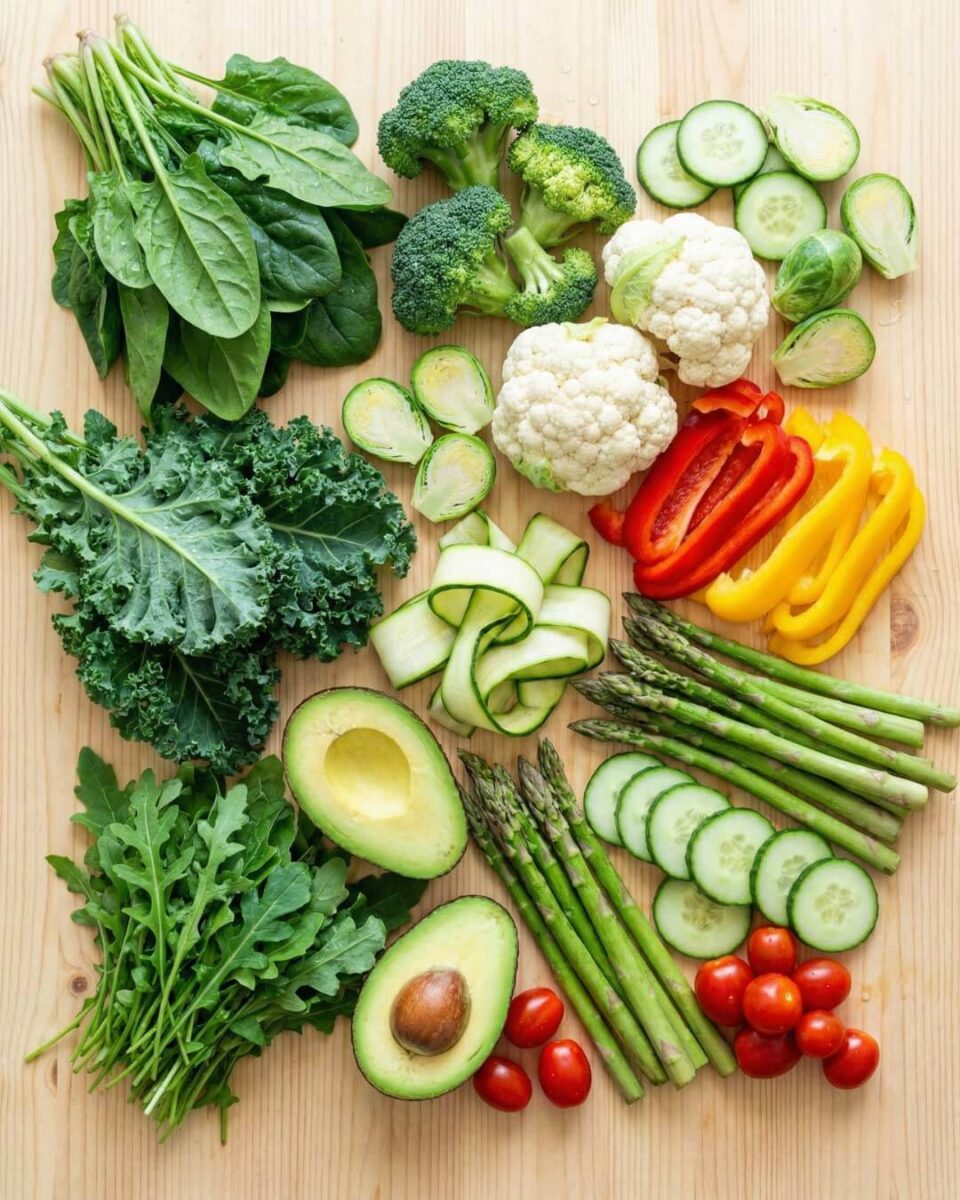
- Spinach (0.4g net carbs) – Nutrient powerhouse, versatile
- Kale (0.9g) – Massage with oil for salads
- Arugula (0.4g) – Peppery, great in salads
- Romaine lettuce (0.3g) – Classic salad base, taco wraps
- Butter lettuce (0.2g) – Softest texture, burger wraps
- Swiss chard (0.7g) – Sauté with garlic
- Bok choy (0.4g) – Asian dishes, stir-fries
- Collard greens (0.9g) – Southern-style or wraps
- Mustard greens (0.5g) – Bold flavor
Serving size: Unlimited. Seriously. Fill half your plate.
Cruciferous Vegetables (Low Carb, High Fiber)
These fiber-rich vegetables support gut health and satiety.
Best Choices (per 1 cup cooked):
- Broccoli (3.6g net carbs) – Roasted with olive oil = heaven
- Cauliflower (2.9g) – Rice it, mash it, roast it
- Brussels sprouts (4.9g) – Roast until crispy
- Cabbage (2.3g) – Green or red, raw or cooked
- Asparagus (2.4g) – Grilled or roasted
- Zucchini (2.4g) – Spiralize for “zoodles”
Cooking tip: Roast at 425°F with olive oil and salt. Game-changing texture.
Other Low-Carb Vegetables
Best Choices (per serving):
- Bell peppers (4-6g per medium) – All colors work, red slightly higher
- Cucumber (2g per cup) – Hydrating, crunchy snack
- Celery (1g per cup) – Classic with almond butter
- Radishes (2g per cup) – Underrated, roast them!
- Mushrooms (2-3g per cup) – Umami flavor bomb
- Green beans (4g per cup) – Steamed or sautéed
- Eggplant (2.8g per cup) – Great for keto lasagna layers
- Tomatoes (4-5g per medium) – Technically fruit, moderate portions
- Avocado (2-3g per medium) – The keto MVP (yes, it’s a fruit)
- Olives (1-2g per 10 olives) – Green or black, both great
Portion awareness: Cherry tomatoes add up fast. Three tomatoes = 15g net carbs. Use as garnish, not the base.
Vegetables to LIMIT (Moderate Carbs)
These aren’t banned, but require portion control:
⚠️ Onions (7g per ½ cup cooked) – Use small amounts for flavor
⚠️ Garlic (1g per clove) – Flavor agent, totally fine
⚠️ Leeks (6g per ½ cup) – Similar to onions
⚠️ Spaghetti squash (5-7g per cup) – Good pasta substitute in moderation
⚠️ Pumpkin (6-8g per ½ cup) – Small portions only
Vegetables to AVOID (High Starch, High Carbs)
Root vegetables and starchy vegetables wreck ketosis:
❌ Potatoes (33g per medium) – White, red, or Yukon
❌ Sweet potatoes (24g per medium) – Still too high despite nutrients
❌ Yams (27g per cup)
❌ Corn (19g per cup) – Grain, not vegetable
❌ Peas (14g per cup) – Legume, starchy
❌ Carrots (6-7g per medium raw, 12g cooked) – Baby carrots add up fast
❌ Beets (13g per cup)
❌ Parsnips (17g per cup)
❌ Butternut squash (15g per cup)
Exception: Tiny amounts of carrots or onions for flavoring soups (1-2g worth) won’t break ketosis. But don’t make them meal staples. Eating too many root vegetables is one of the 11 keto mistakes that sabotage beginners who don’t realize how carb-dense they are.
🍽️ READY TO START KETO WITH A COMPLETE MEAL PLAN?
You’ve got the food list—now see how to combine these foods into delicious, satisfying meals.
Our free 7-day keto kickstart guide uses the exact foods from this list to create simple, beginner-friendly meals. No complicated recipes. No specialty ingredients.
We respect your privacy. Unsubscribe anytime.
HEALTHY FATS & OILS: YOUR ENERGY SOURCE
On keto, fat replaces carbs as your primary fuel. Quality matters.
Best Cooking Oils (High Smoke Point, Stable)
Best Choices:
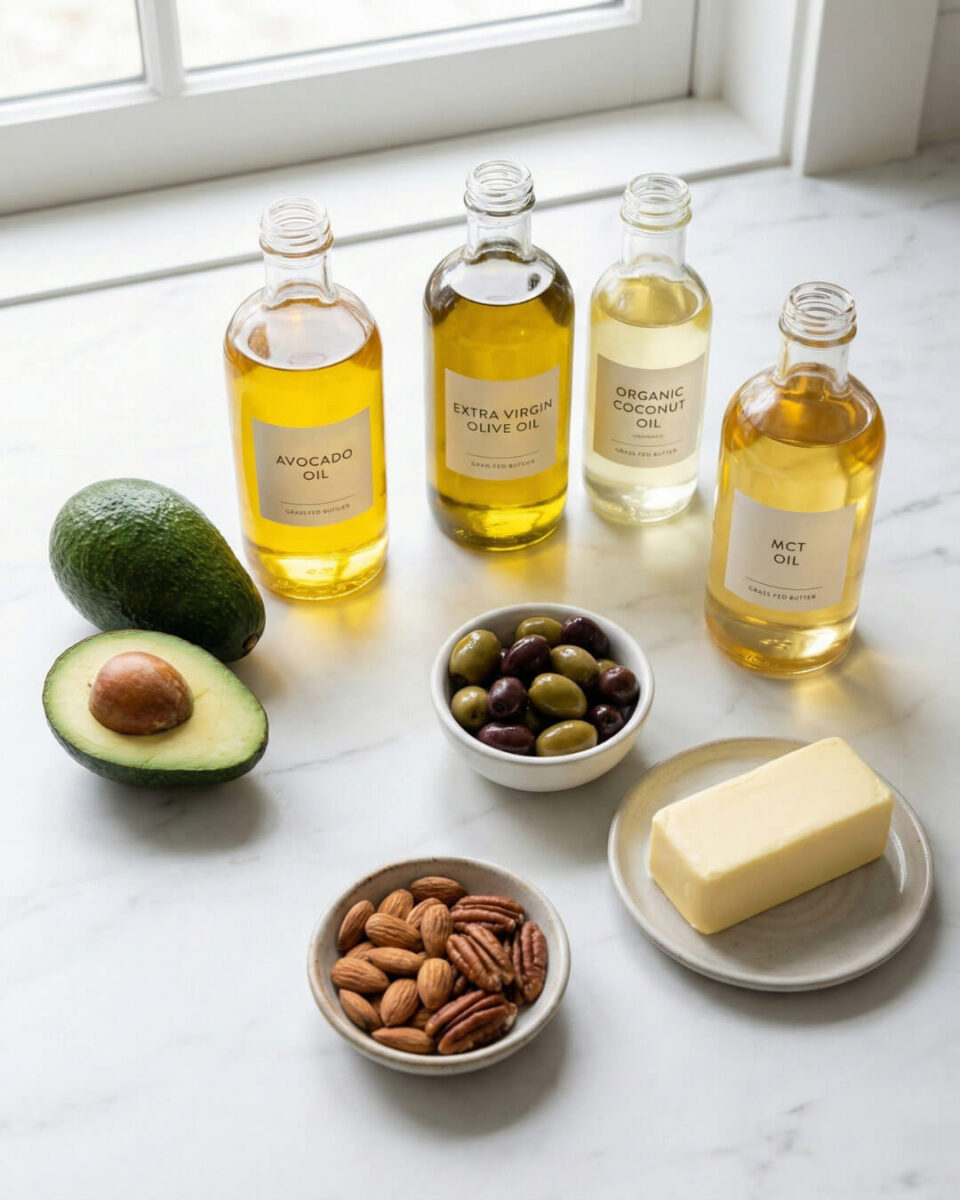
- Avocado oil (0g, smoke point 520°F) – Perfect for high-heat cooking
- Coconut oil (0g, 350°F) – Medium-chain triglycerides (MCTs) for quick energy
- Ghee (clarified butter) (0g, 485°F) – Nutty flavor, lactose-free
- Grass-fed butter (0g, 350°F) – Use for lower-heat cooking
- Olive oil (0g, 375°F) – Extra virgin for salads, regular for cooking
- MCT oil (0g) – Pure C8/C10 fatty acids, never cook with it (digestive issues)
Daily target: 3-5 tablespoons of fats/oils spread across meals (135-225 calories from fat).
Pro tip: Drizzle olive oil on cooked vegetables. Add butter to everything. Don’t be shy.
Healthy Fat Sources (Whole Foods)
Best Choices:
- Avocados (2-3g per medium) – Monounsaturated fat, potassium, fiber
- Olives (1-2g per 10) – Heart-healthy fats, convenient snack
- Nuts – See dedicated section below
- Seeds – Chia, flax, hemp, pumpkin (moderation)
- Fatty fish – Salmon, mackerel, sardines (omega-3s)
- Egg yolks – Don’t fear the yolk, that’s where nutrients live
- Full-fat cheese – See dairy section
- Heavy cream (0.4g per tablespoon) – Coffee, sauces, whipped cream
Oils & Fats to AVOID
❌ Vegetable oil – Highly processed, inflammatory omega-6s
❌ Canola oil – Despite being “low carb,” avoid for health
❌ Soybean oil – Pro-inflammatory
❌ Corn oil – Same issues as above
❌ Margarine – Trans fats, artificial
❌ Shortening – Hydrogenated oils
Why avoid? These seed oils are heavily processed and promote inflammation despite being zero-carb, as documented by Harvard Health. Stick to the healthy fats above.
Halal alternative: Use beef tallow (0g) instead of lard for traditional recipes requiring solid cooking fat.
FULL-FAT DAIRY: CHOOSE WISELY
Dairy can support or sabotage keto depending on choices.
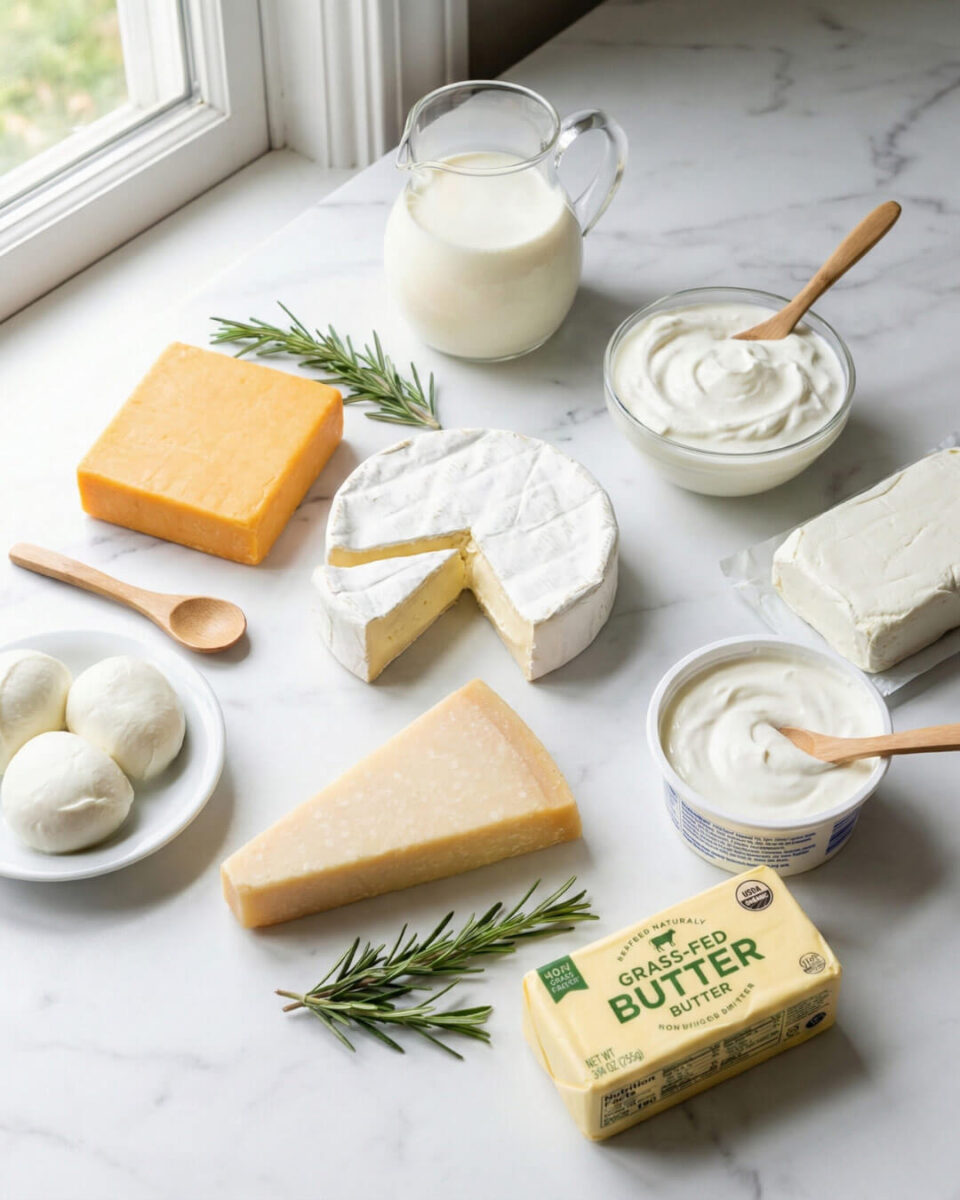
Best Dairy Choices (Low Carb, High Fat)
Best Choices:
- Heavy whipping cream (0.4g per tbsp) – Coffee, sauces, desserts
- Cream cheese (0.8g per oz) – Breakfast, fat bombs
- Sour cream (1g per 2 tbsp) – Topping, dips
- Butter (0g) – Grass-fed preferred
- Ghee (0g) – Clarified butter, lactose-free option
- Hard cheeses – Cheddar (0.4g per oz), Parmesan (0.9g), Swiss (1.5g), Gouda (0.6g)
- Soft cheeses – Brie (0.1g per oz), Goat cheese (0.3g), Feta (1.2g)
- Mozzarella (0.6g per oz) – Full-fat only
- Cottage cheese (3-4g per ½ cup) – Higher carb, moderate portions
- Greek yogurt, full-fat plain (4-6g per ½ cup) – Unsweetened only
Portion control: Cheese is easy to overeat. Measure portions initially to calibrate eyeball estimates.
Lactose intolerant? Choose aged hard cheeses (lower lactose) or ghee (zero lactose).
Dairy to LIMIT
⚠️ Ricotta cheese (3-4g per ½ cup) – Higher carb
⚠️ Half-and-half (1-2g per 2 tbsp) – Use heavy cream instead
⚠️ Whole milk (11-12g per cup) – Way too high
Dairy to AVOID
❌ Skim milk / 2% milk (12-13g per cup)
❌ Flavored yogurt (20-30g per serving) – Sugar bomb
❌ Sweetened coffee creamers (5-8g per tbsp)
❌ Ice cream (regular) (20-30g per ½ cup) – Make keto ice cream instead
❌ Condensed milk (166g per cup!) – Basically liquid sugar
❌ Low-fat cheese – Lower fat = higher carb ratio, less satisfying
NUTS & SEEDS: CONVENIENT KETO SNACKS (PORTION CRITICAL)
Nuts are nutritious but calorie-dense and surprisingly carby. Easy to overeat.
Best Nut Choices (Per 1 oz / ~28g serving)
Listed best to highest carb:
Best Choices:
- Pecans (1.2g net carbs) – Lowest carb nut, buttery flavor
- Brazil nuts (1.4g) – Selenium powerhouse, limit to 3-4 daily
- Macadamia nuts (1.5g) – Creamy, expensive, worth it
- Walnuts (2g) – Omega-3s, brain health
- Hazelnuts (2g) – Great in keto baking
- Almonds (2.5g) – Versatile, careful with portions
- Peanuts (4g) – Technically a legume, moderate portions
- Pistachios (5g) – Higher carb, easy to overeat
- Cashews (7.7g) – AVOID or tiny portions only
Critical mistake: Eating “a handful” without measuring. One handful of almonds = 2-3 oz = 5-7.5g carbs. Three handfuls throughout the day? There’s your entire carb budget gone.
Solution: Pre-portion into 1 oz bags (about 20-25 almonds). Track initially until portions are calibrated.
Best Seed Choices
Best Choices (per 1 oz):
- Chia seeds (2g net carbs) – Absorbs liquid, creates pudding texture
- Flaxseeds (ground) (0g) – Must grind for nutrient absorption
- Hemp seeds (1.3g) – Complete protein, nutty flavor
- Pumpkin seeds (pepitas) (1.3g) – Crunchy, magnesium-rich
- Sunflower seeds (2.4g) – Budget-friendly snack
- Sesame seeds (2.1g) – Tahini base, garnish
Usage: Sprinkle on salads, blend into smoothies, make seed crackers, create keto granola.
Nut & Seed Products
Best Choices:
- Almond butter (2.5g per 2 tbsp) – No added sugar versions only
- Peanut butter (natural) (4g per 2 tbsp) – Check ingredients: peanuts, salt only
- Sunflower seed butter (3g per 2 tbsp) – Nut-free alternative
- Tahini (2.5g per 2 tbsp) – Sesame paste, Middle Eastern staple
- Coconut butter (2g per 2 tbsp) – Made from coconut meat
What to avoid: Jif, Skippy, or any peanut butter with added sugar (usually 3-4g extra carbs per serving).
KETO-FRIENDLY FRUITS: THE SHORT LIST
Most fruits are sugar bombs. But a few work in moderation.
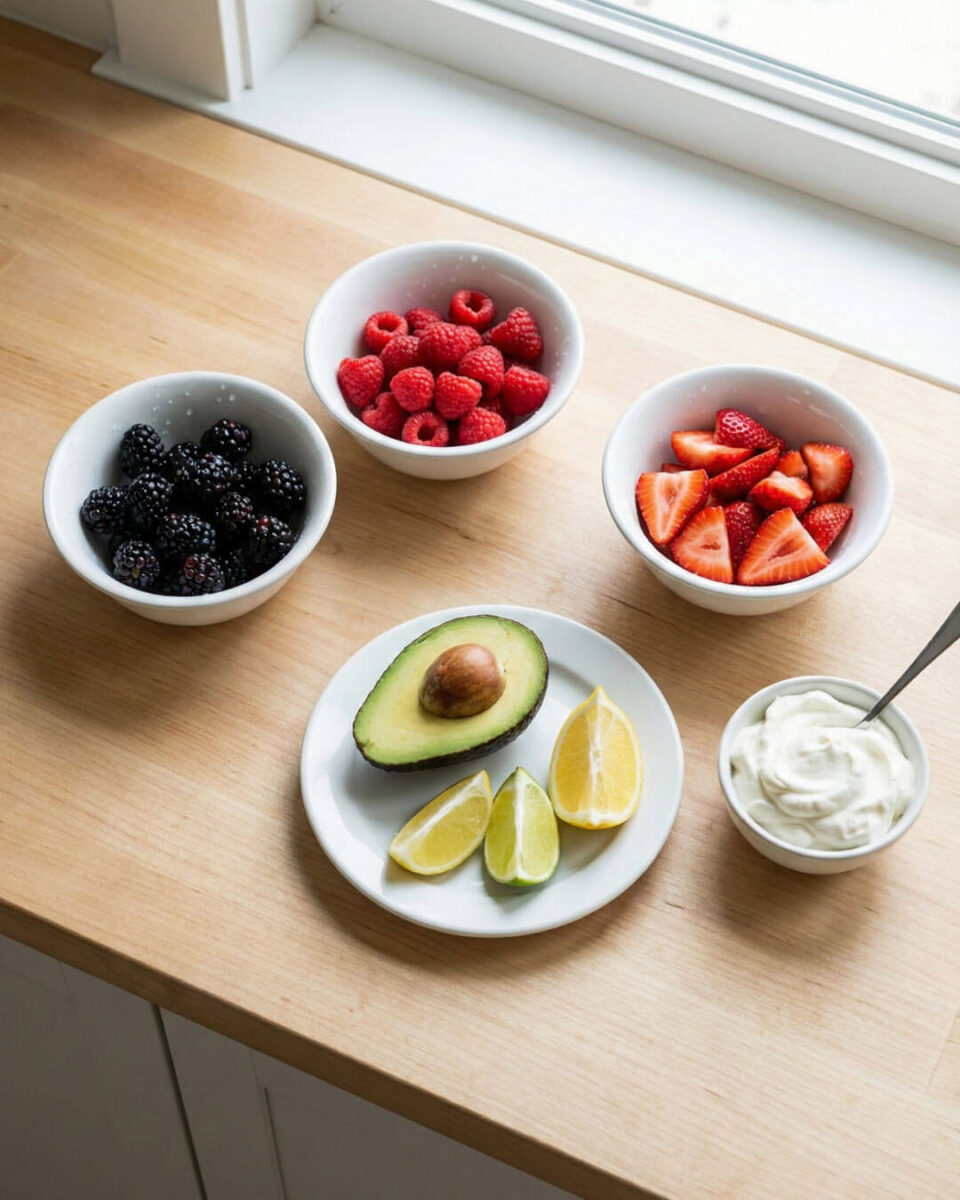
Lowest Carb Fruits (Small Portions)
Best Choices:
- Avocado (2-3g per medium) – Yes, it’s technically a fruit, your MVP
- Blackberries (3g per ½ cup) – Antioxidant-rich
- Raspberries (3.3g per ½ cup) – Sweet-tart, high fiber
- Strawberries (4.3g per ½ cup) – Classic, portion carefully
- Coconut (fresh) (2.5g per ½ cup shredded unsweetened) – Healthy fats included
- Lemon juice (1g per 2 tbsp) – Flavoring agent
- Lime juice (1.3g per 2 tbsp) – Cooking, cocktails (sugar-free)
- Tomatoes (4g per medium) – Technically fruit, use as vegetable
Serving reality check: ½ cup of berries = about 5-6 large strawberries or a small handful of raspberries. Not a heaping bowl.
Pro tip: Mix berries with heavy whipped cream for a keto dessert. Measure the berries.
Fruits to AVOID (Sugar Bombs)
Every other fruit is too high in natural sugars:
❌ Banana (24g per medium) – Potassium isn’t worth the carbs
❌ Apple (21g per medium)
❌ Orange (15g per medium)
❌ Grapes (16g per cup)
❌ Mango (22g per cup)
❌ Pineapple (19g per cup)
❌ Watermelon (11g per cup) – Still too high despite being “mostly water”
❌ Dried fruit (20-30g per ¼ cup) – Concentrated sugar
❌ Fruit juice – Liquid sugar, never keto
Exception: A few blueberries (10g per cup) occasionally, but they’re borderline. Most people avoid entirely.
BEVERAGES: WHAT TO DRINK ON KETO
Hydration matters on keto. Electrolyte balance is critical.
Best Beverage Choices (Zero or Low Carb)
Best Choices:
- Water (0g) – Your primary beverage, aim for 8-10 cups daily
- Sparkling water (0g) – Unsweetened, flavored okay (check labels)
- Coffee (0g) – Black or with heavy cream, no sugar
- Tea (0g) – Green, black, herbal, unsweetened
- Bone broth (0-1g) – Electrolytes + hydration
- Diet soda (0g) – Controversial but technically keto (artificial sweeteners)
- Almond milk (unsweetened) (1-2g per cup) – Coffee creamer alternative
- Coconut milk (unsweetened) (1-2g per cup) – Full-fat canned for cooking
- Bulletproof coffee (0g) – Coffee + butter + MCT oil (popular keto drink)
Electrolyte drinks:
- Powerade Zero (0g) – Artificial sweeteners
- LMNT (0g) – Clean electrolyte packets, keto-specific
- Ultima Replenisher (1g) – Natural flavors, stevia-sweetened
Alcohol (if you drink):
- Spirits (0g) – Vodka, gin, tequila, whiskey, rum (unflavored, unmixed)
- Dry wine (3-4g per 5oz glass) – Red or white, occasional
- Champagne (3-4g per 5oz) – Brut or extra brut
- Light beer (3-6g per 12oz) – Michelob Ultra, Corona Premier
Alcohol caution: Your tolerance drops on keto. Drink slowly. Alcohol pauses fat burning while your liver processes it.
Beverages to AVOID
❌ Regular soda (39g per 12oz can)
❌ Juice (24-36g per cup) – Even “fresh-squeezed”
❌ Sweet tea (22g per cup)
❌ Sweetened coffee drinks (30-50g) – Frappuccinos, lattes with syrups
❌ Regular beer (12-15g per 12oz)
❌ Sweet wine (8-12g per glass) – Moscato, dessert wines
❌ Energy drinks (regular) (27-30g per can)
❌ Sports drinks (regular Gatorade) (14g per 8oz)
❌ Milk (12g per cup)
❌ Smoothies (30-60g typical) – Fruit-based sugar bombs
CONDIMENTS, SAUCES & SEASONINGS: HIDDEN CARB TRAPS
This category sneaks carbs into otherwise perfect keto meals.
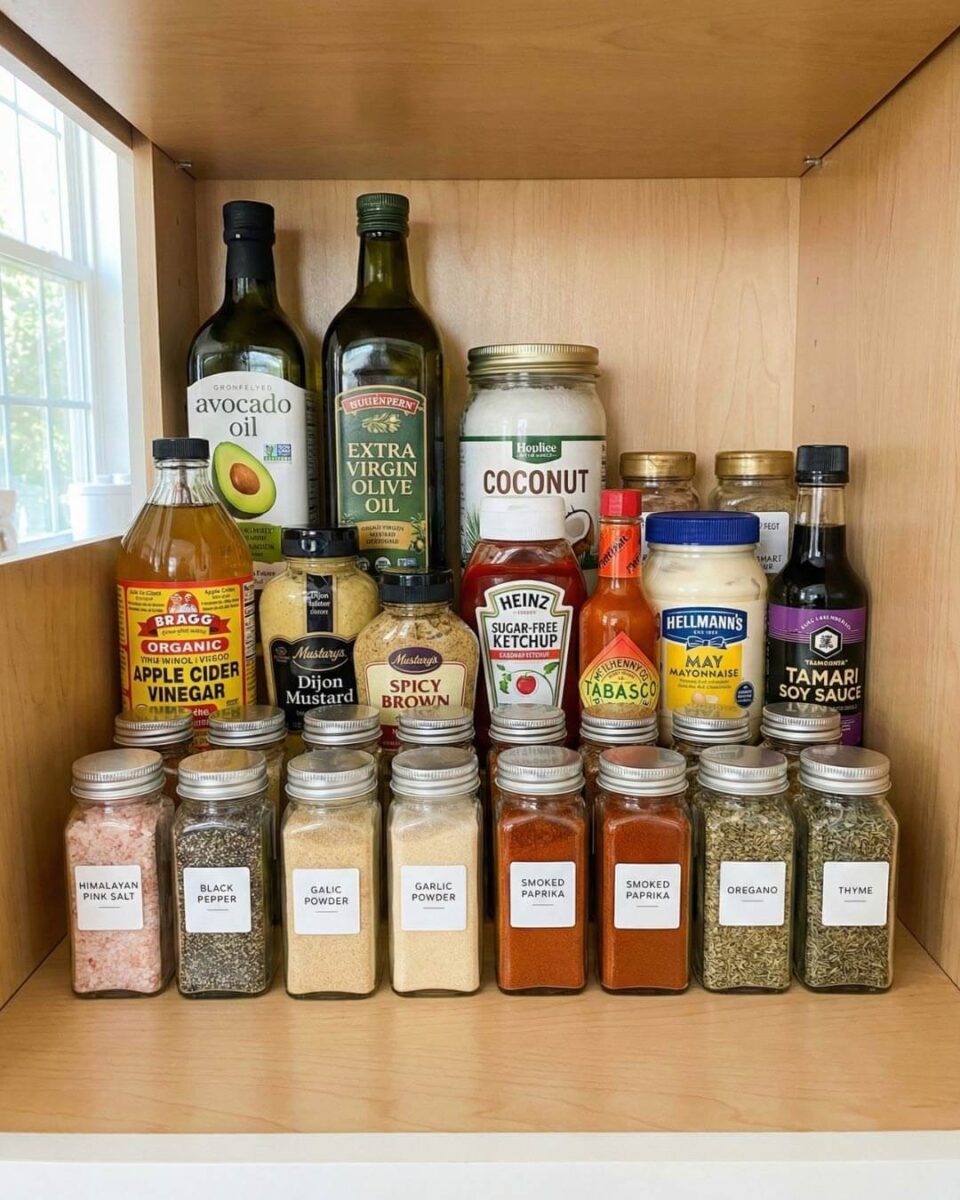
Best Condiment Choices (Low to Zero Carb)
Best Choices:
- Mayonnaise (0g per tbsp) – Full-fat, check for added sugar
- Mustard (yellow, Dijon) (0-1g per tsp)
- Hot sauce (0g) – Most varieties, read labels
- Soy sauce (0.6g per tbsp) – Or coconut aminos (1g)
- Vinegar (0-1g) – Apple cider, white, red wine, balsamic (2-3g)
- Pickle relish (sugar-free) (1g per tbsp)
- Sugar-free ketchup (1g per tbsp) – Brands like Primal Kitchen
- Pesto (1g per 2 tbsp) – Check for added sugar
- Salsa (fresh) (2-3g per ¼ cup) – Avoid jarred with added sugar
- Ranch dressing (1-2g per 2 tbsp) – Full-fat, check label
- Blue cheese dressing (1-2g per 2 tbsp)
- Caesar dressing (0.5g per 2 tbsp)
All herbs & spices: Basil, oregano, thyme, rosemary, cilantro, parsley, cumin, paprika, garlic powder, onion powder, cinnamon, turmeric, ginger = 0g (in normal portions)
Salt is essential: Don’t fear it. You need 5-7g daily on keto to maintain electrolytes.
Condiments to AVOID (Sugar-Loaded)
❌ Regular ketchup (4-5g per tbsp) – 25% of bottle is sugar
❌ BBQ sauce (6-12g per 2 tbsp)
❌ Teriyaki sauce (8g per tbsp)
❌ Sweet chili sauce (6-8g per tbsp)
❌ Honey mustard (5g per tbsp)
❌ Catalina dressing (7g per 2 tbsp)
❌ Thousand Island (5g per 2 tbsp)
❌ Balsamic glaze (10-12g per tbsp) – Reduced = concentrated sugar
Label reading skill: If sugar, honey, agave, or corn syrup appears in the first 3 ingredients, skip it.
SWEETENERS: WHAT WORKS ON KETO
Satisfying your sweet tooth without spiking blood sugar.
Best Keto Sweeteners (Zero Glycemic Impact)
Best Choices:
- Erythritol (0g impact, 5 calories per tsp) – No aftertaste, bakes well, 70% sweetness of sugar
- Monk fruit (0g, 0 calories) – Natural, no aftertaste, expensive
- Stevia (0g, 0 calories) – Natural, potent (use sparingly), some hate the taste
- Allulose (0g, 0.4 calories per tsp) – Rare sugar, tastes most like real sugar, expensive
- Xylitol (3g carbs but low glycemic) – Good for dental health, TOXIC TO DOGS
Blends that work:
- Swerve – Erythritol + oligosaccharides
- Lakanto – Erythritol + monk fruit
- Truvia – Erythritol + stevia
Usage tip: Erythritol can crystallize in cold applications. Use powdered versions for frostings and cold desserts.
Sweeteners to AVOID (Blood Sugar Impact)
❌ Sugar (4g per tsp) – Obviously
❌ Honey (5.8g per tsp) – Natural doesn’t mean keto
❌ Agave (4g per tsp) – Fructose bomb
❌ Maple syrup (4.5g per tsp)
❌ Coconut sugar (4g per tsp) – Still sugar
❌ Maltitol (2.1g per tsp, high glycemic) – Common in “sugar-free” candies, causes digestive issues
❌ Aspartame (0g but controversial) – Diet soda ingredient, some avoid for health concerns
❌ Sucralose (0g but may impact gut bacteria) – Splenda brand
Note on “sugar-free” products: Check labels. Many use maltitol which absolutely impacts blood sugar despite “sugar-free” claims.
PACKAGED & PROCESSED KETO FOODS: READ LABELS
The “keto” label doesn’t guarantee low carb or healthy.
Keto-Friendly Packaged Foods (Verify Net Carbs)
Best Halal-Friendly Choices (if you choose convenience):
- Beef jerky (sugar-free) (0-3g) – Read labels obsessively, verify halal certification
- Canned tuna/salmon (0g) – Packed in water or oil
- Sardines (0g) – Omega-3s, convenience
- Olives (jarred) (1g per serving)
- Pickles (dill, sugar-free) (1g per pickle)
- Canned coconut milk (full-fat) (1-2g per ½ cup)
- Dark chocolate (85%+) (3-5g per oz) – Small amounts
- Shirataki noodles (0-1g per serving) – Konjac root, zero-calorie pasta substitute
- Nut thins/seed crackers (3-4g per serving) – Almond flour based
- Seaweed snacks (0-1g per package) – Crunchy, salty, minimal calories
“Keto” branded products (scrutinize carefully):
- Keto protein bars – Many use maltitol (avoid) or have 10g+ net carbs
- Keto ice cream (5-8g per pint) – Brands like Rebel, Enlightened
- Keto bread (1-2g per slice) – Brands vary wildly
- Keto tortillas (2-4g each) – Mission Carb Balance works
Golden rule: Flip to nutrition label. Ignore marketing. Calculate net carbs yourself. Companies lie about “impact carbs.”
Processed Foods to AVOID
❌ Granola bars (20-30g)
❌ Protein bars with maltitol
❌ “Keto-friendly” bars over 10g net carbs – Marketing lies
❌ Trail mix (20-30g) – Dried fruit kills it
❌ Crackers (regular) (15-20g per serving)
❌ Chips (15-18g per oz)
❌ Pretzels (22g per oz)
❌ Popcorn (6g per cup popped) – Adds up fast
FOODS THAT SEEM KETO BUT AREN’T: THE DECEPTIVE LIST
These trick beginners constantly.
❌ “Sugar-free” candy with maltitol (impacts blood sugar)
❌ Protein shakes with “low sugar” (still 10-15g carbs)
❌ Quest bars (4-6g net carbs but questionable fiber claims)
❌ Atkins bars (older formulas) (maltitol issues)
❌ Honey (“natural” sweetener = still sugar)
❌ Coconut water (9g per cup)
❌ Dried fruit (concentrated sugar)
❌ Granola (even “low-sugar” versions = 15-20g)
❌ Quinoa (34g per cup cooked) – “Healthy grain” still a grain
❌ Sweet potato (24g per medium) – Paleo doesn’t mean keto
❌ Balsamic glaze/reduction (12g per tbsp)
❌ Carrots (cooked in quantity) (12g per cup)
❌ Most restaurant “keto bowls” (check ingredients—often 20-30g)
Why the confusion? Marketing. “Low sugar,” “paleo,” “gluten-free,” and “natural” don’t mean low carb. Only net carbs matter.
HALAL KETO MEAL BUILDING: PUT IT ALL TOGETHER
Building keto meals that respect halal dietary requirements is simple.
The Halal Keto Plate Formula
½ Plate: Non-starchy vegetables
- Spinach, broccoli, cauliflower, zucchini, peppers, asparagus
¼ Plate: Halal protein (4-6 oz)
- Chicken thighs, ground beef, lamb chops, salmon, eggs
¼ Plate: Healthy fats
- Avocado, olives, olive oil drizzle, butter on vegetables
Simple Halal Keto Meal Examples:
Breakfast:
- Scrambled eggs (3 eggs) with spinach, feta cheese, olive oil
Lunch:
- Grilled chicken thigh over mixed greens with avocado, cucumber, olive oil + lemon dressing
Dinner:
- Lamb shoulder slow-cooked with cauliflower rice, roasted broccoli with butter
Snacks:
- Hard-boiled eggs
- Handful of pecans (measured)
- Celery with almond butter
- Olives and cheese cubes
No pork needed. Ever. Your halal butcher has everything required for keto success. This diet respects your values completely.
GROCERY SHOPPING STRATEGY: NAVIGATE THE STORE
Make shopping efficient and foolproof.
Shop the Perimeter First
Outer aisles contain whole foods:
- Produce section – Load up on leafy greens, cruciferous vegetables, avocados
- Meat counter – Halal butcher or regular meat section for chicken, beef, lamb
- Seafood counter – Salmon, tuna, shrimp
- Dairy section – Heavy cream, butter, cheese, Greek yogurt (full-fat plain)
- Eggs – Buy 2-3 dozen if you eat them daily
Strategic Inner Aisle Stops
Only venture into aisles for:
- Cooking oils (avocado, olive, coconut)
- Nuts and seeds (almonds, pecans, chia)
- Canned goods (tuna, salmon, coconut milk)
- Condiments (mayo, mustard, hot sauce)
- Spices and seasonings
What to Skip Entirely
Don’t even walk down these aisles:
- Bread/bakery
- Pasta
- Cereal
- Snack foods
- Candy
- Soda (except diet if you drink it)
- Frozen desserts (unless keto-specific brand)
Time savings: You’ll spend 30% less time shopping once you know your keto food list.
MEAL PREP TIPS: SAVE TIME, STAY CONSISTENT
Consistency requires preparation.
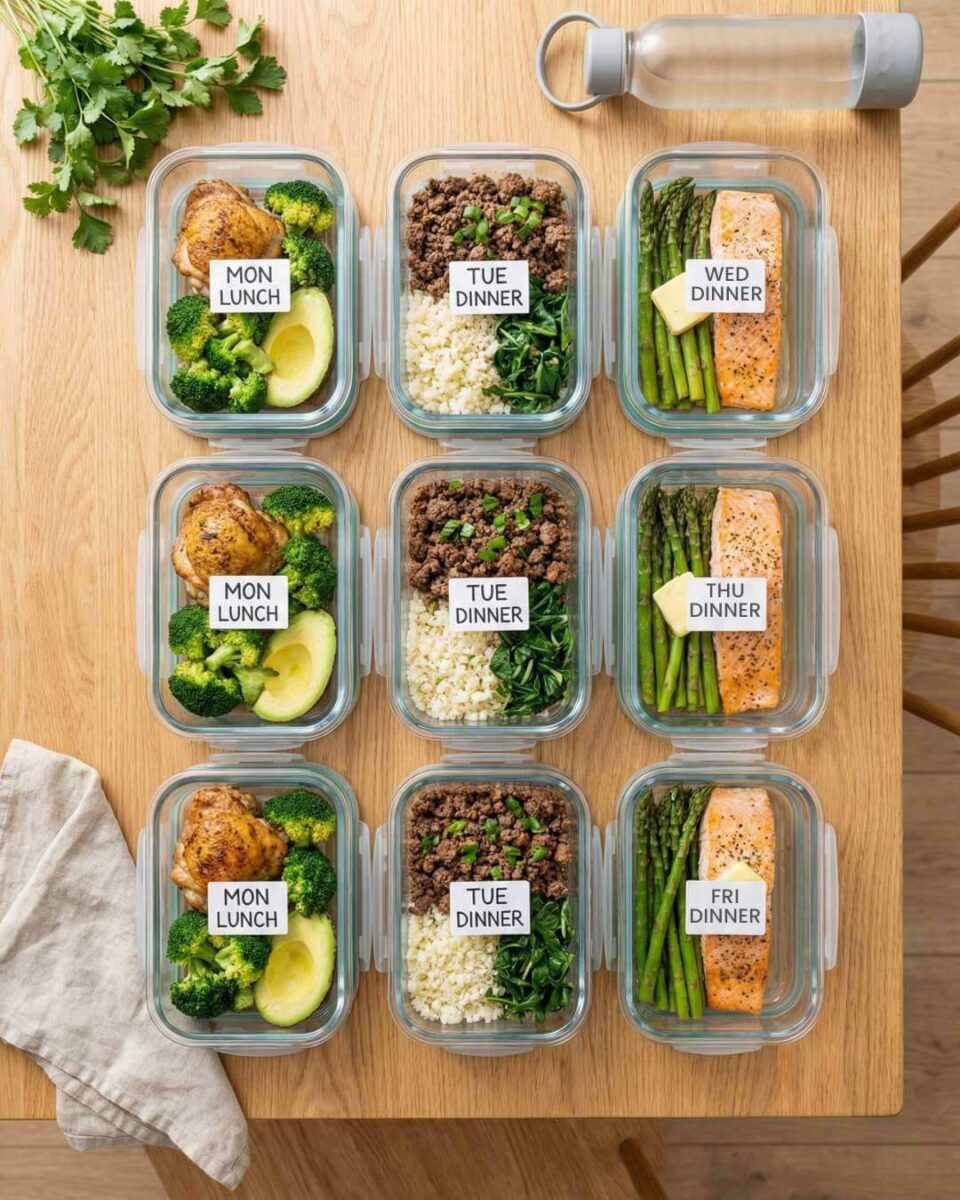
Sunday Meal Prep Routine (2 hours):
- Cook proteins in bulk:
- Roast 4 lbs chicken thighs
- Ground beef (3 lbs) seasoned
- Hard-boil 18 eggs
- Prep vegetables:
- Wash and chop lettuce for salads
- Roast sheet pans of broccoli, cauliflower, Brussels sprouts
- Spiralize 3-4 zucchinis for zoodles
- Portion into containers:
- 4-6 oz protein + vegetables + fat in each
- 5-7 meals ready for the week
- Prep snacks:
- Portion nuts into 1 oz bags
- Cut cheese into cubes
- Wash celery sticks
Result: Grab-and-go keto meals all week. No decision fatigue. No excuses. These meal prep strategies work perfectly with our 7-day keto meal plan that uses these exact foods in a structured weekly format.
CONCLUSION: YOUR KETO FOOD LIST IS YOUR ROADMAP
This isn’t a diet. It’s a food framework.
You now know exactly which foods keep you in ketosis and which ones don’t. No more standing in grocery stores confused. No more wondering if something’s “keto enough.”
The vegetables that fill you up without the carbs. The proteins that satisfy. The fats that fuel your body. The sneaky foods that seem innocent but aren’t.
Your action steps:
Download the free PDF keto food list (link below). Print it. Keep it in your wallet or phone. Reference it obsessively the first two weeks.
Start simple. Choose 10-15 foods from this list that you genuinely enjoy. Build your meals around those. Master the basics before getting fancy.
Track net carbs initially—even on lazy keto—until you’ve internalized which portions work. Use our keto macro calculator to dial in your targets.
Remember: this keto food list includes 200+ halal-friendly options. You don’t need to eat all of them. Find 30-40 foods you love and rotate them. Variety is optional. Consistency is mandatory.
Ready to shop? Check out our complete beginner’s guide on how to start keto, then use our keto meal plan that applies these exact foods in a week-by-week format.
The hardest part is behind you—deciding to start. Now you just need to execute.
Your keto food list is your compass. Trust it.
Affiliate disclosure: I earn a small commission if you buy through the link below, at no cost to you. I only recommend what I genuinely rate.
🚀 Got the food list — now want it turned into actual meals?
Knowing what to eat is half the battle. Turning 200+ foods into a week of meals you’ll actually look forward to is the other half — and it’s where most people stall.
If you’d rather not build that from scratch, this quick quiz creates a custom keto plan from your preferences, using foods like the ones on this list. It’s free to take, and you’ll walk away with your personalized macros even if you just want the numbers.
FREQUENTLY ASKED QUESTIONS
How many foods from this keto food list do I need to eat regularly?
You don’t need variety—you need consistency. Most successful keto followers rotate 20-30 foods they genuinely enjoy. Pick proteins you like (chicken, beef, salmon), 5-6 vegetables you’ll actually eat (spinach, broccoli, cauliflower), and healthy fats (avocado, olive oil, butter). Build your meals around those staples. You can expand variety later once you’re comfortable.
The mistake? Trying to eat every “keto-approved” food and burning out from decision fatigue. Simplify initially.
Can I eat out at restaurants while following this keto food list?
Absolutely. Order any protein (steak, chicken, fish, lamb) and ask for double vegetables instead of rice or potatoes. Request sauces on the side—many contain hidden sugar. Skip the bread basket immediately. Add extra butter or olive oil to your vegetables.
Mexican: Fajitas without tortillas, load up on meat and peppers. Chinese: Skip the rice, order stir-fry with extra vegetables. Burgers: Lettuce wrap or fork and knife, no bun. Italian: Chicken or salmon with vegetables, skip pasta.
Once you understand net carbs from this list, restaurants become easy.
What if I accidentally eat something not on this keto food list?
One meal doesn’t ruin everything. If you eat something higher in carbs (a family meal, social event), don’t panic. You might temporarily exit ketosis—it takes 2-4 days to get back in. Just return to your keto food list at the next meal.
Don’t spiral into “I already messed up, might as well keep eating carbs.” That’s the thinking that sabotages long-term success. Treat it like a GPS recalculation: acknowledge the detour, return to the route.
Most people find that after several weeks on keto, accidentally eating carbs makes them feel terrible (bloating, energy crash), which naturally reinforces adherence.
How do I know if I’m eating enough vegetables from this keto food list?
Aim for 4-6 cups of non-starchy vegetables daily (raw volume). That sounds like a lot but isn’t once cooked—spinach wilts to almost nothing. If you’re constipated, you’re not eating enough vegetables or drinking enough water.
Half your plate should be vegetables at lunch and dinner. Add spinach to your eggs at breakfast. Snack on cucumber or celery. If you track fiber, target 25-30g daily from vegetables and seeds.
The keto food list includes dozens of vegetable options—rotate them to prevent boredom and ensure micronutrient diversity.
Are all the foods on this keto food list halal-friendly?
Yes. The proteins, dairy, vegetables, fats, and other foods listed work with halal dietary requirements. We specifically excluded all pork and pork-derived products. Many halal markets carry halal-certified sausages, deli meats, and specialty items—just verify ingredients for hidden carbs.
Gelatin in some products (like certain brands of sour cream or yogurt) may be pork-derived—check labels or choose brands that specify beef gelatin or plant-based alternatives. When in doubt, stick to whole foods from this list: fresh meat from halal butchers, vegetables, eggs, oils, and whole-fat dairy.
Keto is completely compatible with halal eating.
Can I lose weight eating all the fats on this keto food list?
Yes—keto works by shifting your metabolism to burn fat for fuel instead of carbs. However, eating unlimited calories still prevents weight loss. Fat is satiating, so most people naturally eat less without tracking.
If weight loss stalls after initial success, reduce fat portions slightly (especially added oils, nuts, cheese) while keeping protein and vegetables consistent. The goal isn’t to maximize fat intake—it’s to minimize carbs, eat adequate protein, and use fat for satiety.
Don’t fear the healthy fats on this list, but don’t go overboard either. Listen to genuine hunger cues.
How often should I update or rotate foods from this keto food list?
There’s no requirement to rotate. If you find 25 foods you love and eat them repeatedly, that’s perfectly fine. Nutritionally, as long as you’re including various protein sources and 5-6 different vegetables, you’re getting adequate micronutrients.
Some people thrive on routine (same breakfast daily, rotating 3 dinner proteins). Others need variety to stay motivated. Both approaches work as long as you stick to the keto food list.
Consider rotating vegetables seasonally (asparagus in spring, Brussels sprouts in fall) for natural variety and cost savings.
What’s the biggest mistake people make with this keto food list?
Trusting marketing over labels. A product screams “KETO!” on the front but contains 12g net carbs per tiny serving. Always flip the package and calculate net carbs yourself using the formula from this article.
Second biggest mistake? Not measuring nuts and cheese initially. “A handful” of almonds varies wildly – could be 3g carbs or 10g depending on hand size. Weigh portions for the first week until you can eyeball accurately.
Third? Forgetting vegetables. Some people eat only meat, cheese, and oils, then wonder why they feel terrible. The keto food list includes vegetables for a reason—fiber, micronutrients, satiety, gut health.
Can I follow this keto food list if I’m vegetarian?
It’s challenging but possible. You’ll rely heavily on eggs, full-fat dairy, nuts, seeds, and vegetable proteins like tofu and tempeh (moderate portions). Protein intake becomes harder without meat/fish.
Consider: Eggs (protein staple), Greek yogurt, cheese, hemp seeds, chia seeds, almonds, peanut butter, and green leafy vegetables. Supplement with plant-based protein powder if needed.
Vegetarian keto requires more careful planning than omnivore keto. Calculate macros to ensure adequate protein (0.8-1g per lb of lean body mass).
How long does it take to memorize this keto food list?
Most people internalize their core 20-30 favorite foods within one week of consistent shopping and eating. The full list takes 2-3 weeks to feel automatic.
Initially, keep the PDF on your phone and reference it while shopping. By Week 3-4, you’ll walk into a grocery store and instinctively know what to grab without checking.
The learning curve is steeper than most diets because you’re unlearning decades of “low-fat” programming. But once it clicks, keto becomes effortless. You’ll spot hidden carbs instantly and make decisions on autopilot.
