
Introduction
Meal prep is the difference between keto success and Wednesday night takeout failure.
You start the week motivated. Monday’s great. Tuesday’s fine. By Wednesday evening you’re exhausted, starving, and staring at an empty fridge. The pizza place is on speed dial. Keto is over before the week is.
Here’s what changes everything: spending two hours on Sunday creating 10-15 grab-and-go keto meals. No decisions. No cooking. No excuses.
Keto meal prep isn’t complicated. You don’t need chef skills or expensive equipment. You need a simple system that works with your schedule and actually gets used.
This guide shows you exactly how to meal prep for keto—from choosing the right containers to a complete Sunday routine that produces a week’s worth of meals. You’ll learn which foods prep beautifully, which ones turn to mush, and how to store everything so it tastes fresh on Friday.
By the end, you’ll have a repeatable system that saves 5+ hours weekly and eliminates the daily “what should I eat” stress that derails most beginners.
Let’s build your meal prep routine.
Why Keto Meal Prep Changes Everything
Most keto failures happen between 6-8 PM on weeknights.
You’re tired. Hungry. Decision-fatigued. Cooking from scratch feels impossible. Suddenly that “one cheat meal” becomes three, then keto’s abandoned entirely.
Meal prep solves this in three ways:
1. Eliminates Decision Fatigue
You make food decisions once (Sunday) instead of 14+ times weekly (every meal). Your brain doesn’t have to choose what to eat when you’re exhausted and vulnerable.
2. Saves Massive Time
Batch cooking is 3-4x faster than cooking individual meals. Roasting four chicken breasts takes the same oven time as one. Chopping vegetables once beats chopping 14 times.
Two hours Sunday = 6-8 hours saved during the week. That’s reclaiming an entire workday.
3. Prevents Expensive Failures
Takeout costs $12-18 per meal. If meal prep prevents two weekly takeout failures, that’s $100-150 monthly savings—enough to upgrade to grass-fed beef or wild-caught salmon.
The compounding effect: Consistency builds momentum. Three weeks of successful meal prep creates habits that make keto feel effortless instead of exhausting.For those just starting out, understanding how to start keto with proper planning makes meal prep even more effective.
Essential Keto Meal Prep Tools & Containers
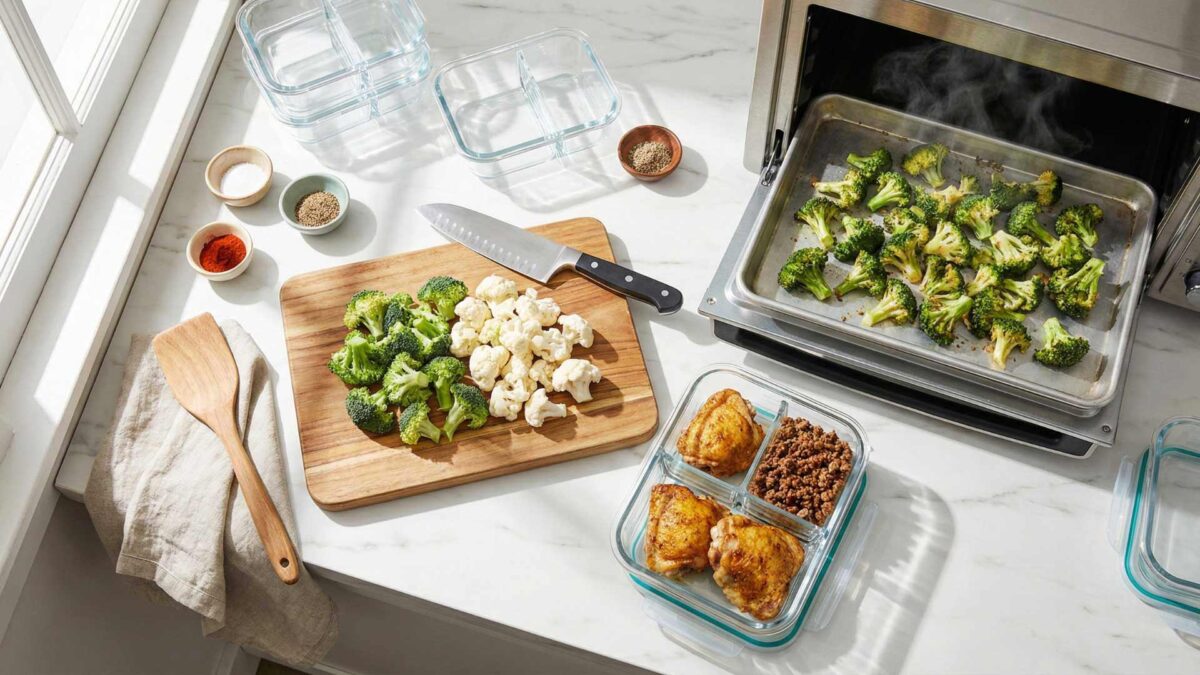
You don’t need a commercial kitchen. You need the right containers and a few strategic tools.
Must-Have Containers
Glass meal prep containers (8-12 containers):
- 3-compartment style (protein + 2 vegetables)
- Dishwasher, microwave, and freezer safe
- BPA-free lids that seal properly
- Size: 28-32 oz capacity per container
Why glass over plastic: Doesn’t stain, doesn’t absorb odors, microwaves evenly, lasts years. Worth the upfront investment.How many: Start with 8-10 containers. This covers 4-5 days of lunches and dinners with room for ingredient storage.
Sheet pans (2-3): Batch roast vegetables and proteins simultaneously
Slow cooker or Instant Pot: Set-and-forget proteins (chicken thighs, pot roast, pulled beef)
Food scale: Verify portions initially until eyeballing becomes accurate
Sharp chef’s knife: Makes vegetable prep 10x faster
Large skillet: Brown 3+ lbs ground beef at once
Helpful Tools (Not Required, But Useful)
What you DON’T need: Fancy sous vide machines, dehydrators, and specialty keto gadgets. Keep it simple initially.
🎁 Prefer a Simple 5-Day Plan to Get Started?
Download the free beginner-friendly keto meal prep guide, complete with a printable shopping list, easy recipes, and a step-by-step prep checklist you can follow this Sunday.
We respect your privacy. Unsubscribe anytime.
The Sunday Meal Prep Routine: Step-by-Step
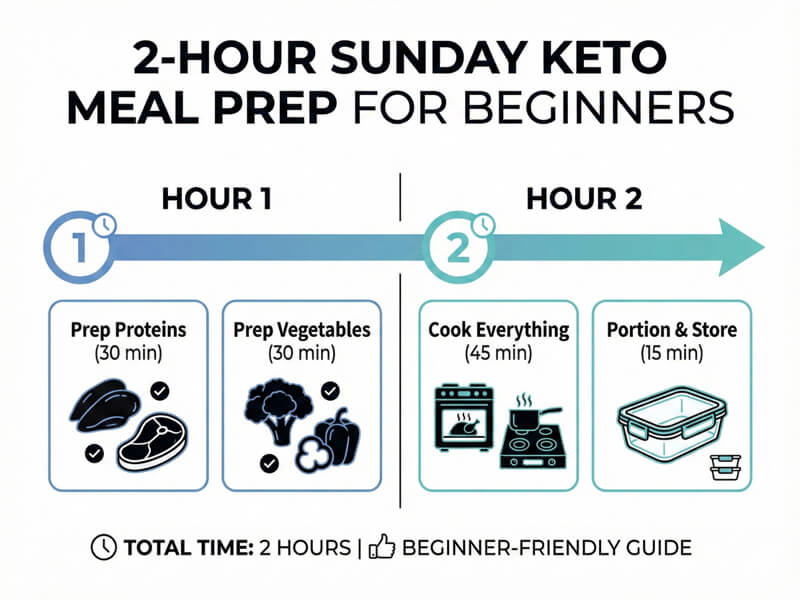
This routine produces 10-15 meals in approximately 2 hours. Adjust quantities based on how many people you’re feeding.
Hour 1: Prep Work (60 minutes)
Proteins (30 minutes):
- Season 4-6 chicken thighs (salt, pepper, garlic powder, olive oil)
- Form 2-3 lbs ground beef into burger patties or leave loose for taco meat
- Hard-boil 12 eggs (set timer, walk away)
- If using: Season a 3-4 lb chuck roast for slow cooker
Vegetables (30 minutes):
- Wash and chop broccoli into florets (2 heads)
- Wash and chop cauliflower (1 head)
- Dice 2-3 bell peppers
- Wash spinach (just rinse, don’t chop)
- Prep zucchini: slice into rounds or spiralize for zoodles
Pro tip: Prep proteins and vegetables simultaneously. While eggs boil (12 minutes), season chicken and chop vegetables.
Hour 2: Cook & Portion (60 minutes)
Cooking (45 minutes):
Oven (425°F):
- Sheet pan 1: Chicken thighs with skin (25-30 minutes)
- Sheet pan 2: Broccoli + cauliflower tossed in olive oil, salt (20-25 minutes)
Stovetop:
- Large skillet: Brown ground beef with taco seasoning (15 minutes)
- Medium pot: Hard-boil eggs if not done (12 minutes)
Everything cooks simultaneously. Set timers. Rotate sheet pans halfway through for even cooking.
Portioning (15 minutes):
While food cools slightly:
- Portion proteins: 4-6 oz per container (chicken thigh, burger patty, or ground beef scoop)
- Add vegetables: Fill remaining container space (broccoli, cauliflower, bell peppers)
- Add fats if needed: Pat of butter on vegetables, drizzle of olive oil
- Seal containers, label with day if helpful
Storage:
- Days 1-3: Refrigerator (main shelf, not door)
- Days 4-5: Refrigerator (still safe, best consumed by Friday)
- Days 6-7+: Freezer (thaw night before in fridge)
Best Keto Proteins to Meal Prep
Not all proteins meal prep equally. Some dry out, others improve with time.
Excellent Meal Prep Proteins
Chicken thighs (bone-in, skin-on):
- Stay moist for 5 days refrigerated
- Reheat beautifully without drying
- Budget-friendly ($0.99-1.49/lb)
- Halal option: Source from halal butchers for zabiha-certified quality
Chicken thighs and ground beef are the most cost-effective meal prep proteins—see our keto on a budget guide for complete money-saving strategies.
Ground beef (80/20):
- Versatile (taco meat, burger patties, meatballs)
- Fat content prevents dryness
- Reheats perfectly in microwave
- Pre-portion into 4-6 oz servings
Hard-boiled eggs:
- Last 7 days refrigerated
- Zero reheating needed (eat cold)
- Perfect snack or protein addition
- Peel all at once on Sunday for grab-and-go ease
Chuck roast (slow cooker):
- Becomes fall-apart tender after 6-8 hours
- Makes 8-12 servings from one roast
- Freezes exceptionally well
- Halal alternative: Beef chuck from halal sources or substitute with lamb shoulder
Salmon (if eating within 3 days):
- Prep Sunday, eat Sunday-Tuesday
- Don’t meal prep salmon for Thursday-Friday (texture degrades)
- Store separately from other foods (smell transfer)
Proteins That Don’t Meal Prep Well
❌ Chicken breasts (skinless, boneless) – Dry out terribly, become rubbery
❌ Steak – Texture changes, best cooked fresh
❌ Delicate fish (tilapia, cod) – Falls apart, gets mushy
❌ Fried eggs – Rubbery when reheated
Solution: Use these proteins for fresh-cooked meals midweek, not for Sunday meal prep.
Best Vegetables to Meal Prep
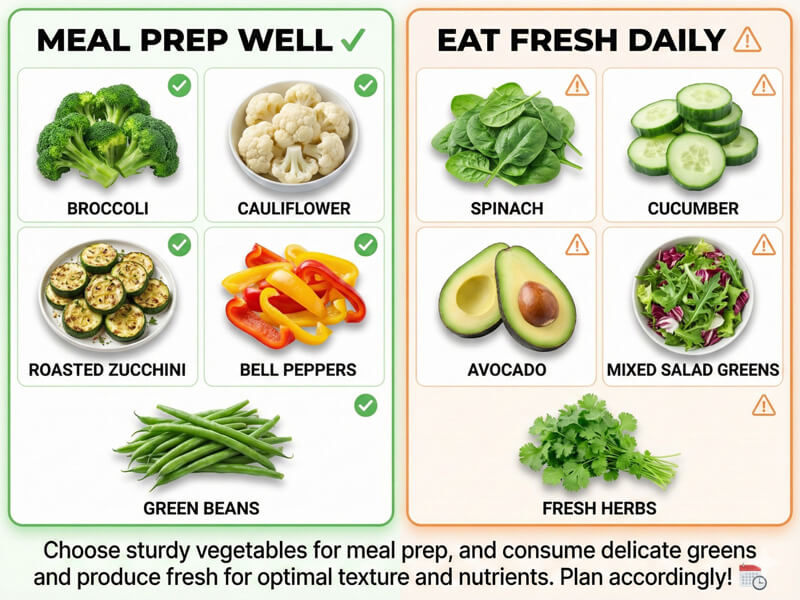
Vegetables are split into two categories: meal prep champions and eat-fresh-only.
Meal Prep Champions (Hold 5+ Days)
Roasted cruciferous vegetables:
- Broccoli – Stays crisp-tender, reheats without mushiness
- Cauliflower – Perfect texture retention
- Brussels sprouts – Actually improve overnight (flavors meld)
- Cabbage – Sautéed or roasted, very forgiving
Other reliable vegetables:
- Bell peppers – Raw or roasted, both work
- Green beans – Steam or roast, hold texture well
- Zucchini – Roasted or grilled (not raw, gets watery)
- Asparagus – Roasted, consume within 4 days
- Mushrooms – Sautéed, fantastic reheated
Preparation tip: Slight undercook (90% done) since they’ll continue cooking slightly when reheated.
Eat Fresh (Don’t Meal Prep These)
❌ Leafy greens – Wilt and become slimy (spinach, lettuce, arugula, kale)
❌ Cucumbers – Get waterlogged and mushy
❌ Avocados – Oxidize and turn brown
❌ Raw vegetables for salads – Prep Sunday evening for Monday lunch max
Solution: Keep these ingredients raw and add fresh daily to meal prep containers. Takes 2 minutes to toss spinach on top of reheated chicken.
The Frozen Vegetable Advantage
Frozen vegetables often BETTER for meal prep:
- Pre-cut, pre-washed, ready to roast
- Flash-frozen at peak ripeness
- No nutrient loss
- Cost 60% less than fresh
- Last months in freezer
Best frozen options: Broccoli, cauliflower, green beans, Brussels sprouts, stir-fry mixes
Method: Roast directly from frozen (add 5-10 minutes to cooking time). No thawing needed.
For complete net carb counts and serving sizes of all vegetables, reference our complete keto food list.
What NOT to Meal Prep
These foods don’t survive the 3-5 day meal prep window.
Foods That Get Soggy
❌ Anything breaded or fried – Loses crispness completely
❌ Keto pizza – Crust gets soggy (make fresh instead)
❌ Zucchini noodles raw – Release water, become mushy
Soggy fix: Meal prep components separately, assemble when eating. Store sauce separate from zoodles, combine when ready.
Foods That Dry Out
❌ Skinless chicken breast – Already mentioned, but worth repeating
❌ Pork chops (lean cuts) – Become shoe leather
❌ Overcooked proteins – If dry on Sunday, inedible by Thursday
Foods That Separate or Congeal
❌ Cream-based sauces – Separate when refrigerated (alfredo, heavy cream sauces)
❌ Cheese sauces – Congeal into solid mass
❌ Egg-based dishes – Scrambled eggs turn rubbery and watery
Solution: Make fresh sauces midweek (takes 5 minutes) or freeze sauce portions separately.
5-Day Beginner Keto Meal Prep Plan
This plan produces 10 meals (5 lunches + 5 dinners) using the Sunday routine above.
Shopping List
Proteins:
- 6 chicken thighs (bone-in, skin-on)
- 2 lbs ground beef (80/20)
- 12 eggs
- Optional: 1 lb shrimp (frozen, for variety)
Vegetables:
- 2 heads broccoli
- 1 head cauliflower
- 3 bell peppers (assorted colors)
- 1 bag spinach (add fresh daily)
- 2 zucchini
Fats & Dairy:
- Butter (for vegetables)
- Olive oil
- Shredded cheddar cheese
- Avocados (buy 3-4, add fresh)
Seasonings:
- Taco seasoning (sugar-free)
- Garlic powder, salt, pepper
Meal Breakdown
Lunch (Monday-Friday):
- Chicken thigh (1)
- Roasted broccoli (1 cup)
- Pat of butter on broccoli
- Calories: ~400 | Fat: 28g | Protein: 35g | Net Carbs: 4g
Dinner (Monday-Friday):
- Ground beef taco meat (6 oz)
- Cauliflower rice (1 cup)
- Diced bell peppers
- Shredded cheese (¼ cup)
- Sour cream (2 tbsp)
- Calories: ~520 | Fat: 38g | Protein: 40g | Net Carbs: 6g
Snacks (add fresh daily):
- Hard-boiled eggs (2)
- Handful of macadamia nuts (1 oz)
- Celery with almond butter
Daily Totals: ~1,400-1,600 calories | Fat: 110-120g | Protein: 115-125g | Net Carbs: 15-20g
Flexibility: Swap meals between lunch/dinner. Add avocado for extra fat. Adjust portions based on your macros.Not sure what your macros should be? Use our keto macros calculator to find your personalized targets before starting meal prep.
Storage & Reheating Tips
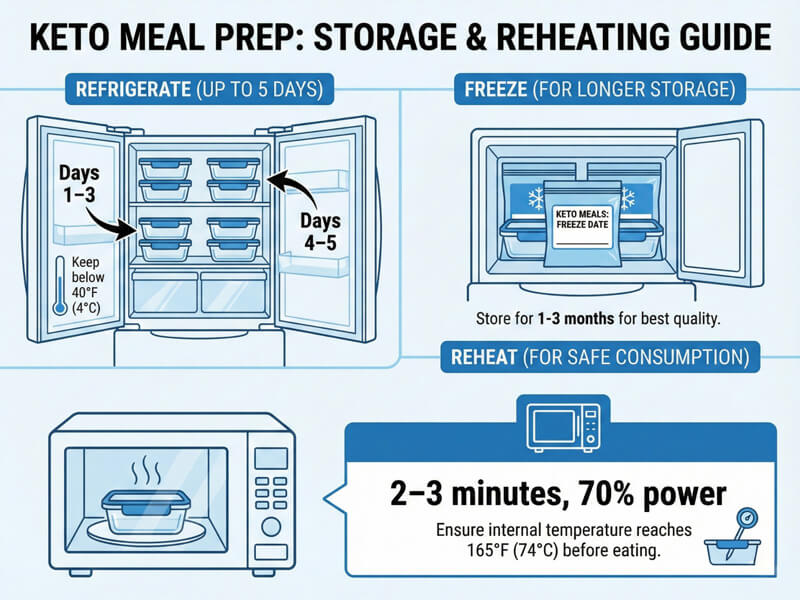
Proper storage makes the difference between fresh-tasting Thursday meals and science experiments.
Refrigerator Storage
Main shelf (not door): Most consistent temperature
Stack strategically: Days 1-3 meals in front, Days 4-5 in back
Temperature: Keep fridge at 37-40°F (verify with thermometer)
Shelf life: 4-5 days maximum for cooked proteins and vegetables
Follow USDA food safety guidelines for leftovers—refrigerate within 2 hours of cooking and consume within 3-4 days for maximum safety.
Day 1-2 containers: Place toward the front of the fridge for easy access
Day 3-5 containers: Store toward the back (coldest zone)
Freezer Storage (For Week 2+)
What freezes well:
- Cooked chicken thighs (up to 3 months)
- Ground beef taco meat (up to 3 months)
- Chuck roast (up to 4 months)
- Roasted vegetables (up to 2 months)
Freezing method:
- Cool completely before freezing (prevents ice crystals)
- Use freezer-safe containers or heavy-duty freezer bags
- Label with contents and date
- Lay flat to freeze (stacks efficiently)
Thawing: Transfer from freezer to fridge 24 hours before eating. Never thaw on counter (bacterial growth).
Reheating Guidelines
Microwave method (fastest):
- Remove lid slightly (vent steam)
- Heat 2-3 minutes on 70% power
- Stir halfway through
- Check internal temp reaches 165°F
Oven method (better texture):
- Preheat to 350°F
- Transfer to oven-safe dish
- Cover with foil
- Heat 15-20 minutes
Stovetop (best for ground beef):
- Heat skillet over medium
- Add splash of water or broth
- Stir frequently
- Heat until steaming (165°F internal)
Never reheat twice: Food safety risk. Only reheat portions you’ll eat immediately.
Common Meal Prep Mistakes (And How to Avoid Them)
Mistake #1: Prepping Too Much Variety
The error: Planning 14 different meals for the week.
Why it fails: Overwhelming. Takes 5+ hours. Too many ingredients. Most spoil before you eat them.
Fix: Repeat 2-3 meal combinations. Variety comes from different seasonings, not different proteins.
Mistake #2: Not Labeling Containers
The error: Identical containers, no labels, mystery contents by Thursday.
Why it fails: You forget what’s inside. Eat random meals. Miss nutrition targets.
Fix: Use masking tape + marker. Label: “Lunch Mon” or “Dinner Thu.” Takes 30 seconds, prevents confusion.
Mistake #3: Overcooking Proteins
The error: Cooking chicken to 180°F “to be safe.”
Why it fails: Dry on Sunday, inedible by Wednesday.
Fix: Always cook chicken to safe minimum internal temperatures of 165°F—use a meat thermometer to verify doneness and prevent both undercooking and overcooking. Chicken continues cooking slightly when stored.
Mistake #4: Ignoring Sauce Separation
The error: Meal prepping alfredo chicken or cheese-based dishes.
Why it fails: Sauces separate, congeal, become unappetizing blobs.
Fix: Store sauces separately in small containers. Add when reheating. Takes 1 minute, prevents waste.
Mistake #5: Using Cheap Containers
The error: Buying 20 disposable plastic containers for $5.
Why it fails: Lids don’t seal (leaks in bag), plastics warp in microwave, food tastes like plastic by day 3.Fix: Buy 8-10 quality glass containers ($30-40 investment). They last years, food tastes better, no chemical leaching.
Frequently Asked Questions
How long does meal-prepped food stay fresh?
Cooked proteins and vegetables stay safe for 4-5 days when refrigerated at 37-40°F. For maximum freshness, eat meal prep within this window. If prepping for longer, freeze meals on Days 4-5 and thaw in the refrigerator 24 hours before eating. Hard-boiled eggs last 7 days. Never leave cooked food at room temperature for more than 2 hours before refrigerating.
Can I meal prep if I don’t have 2 hours on Sunday?
Absolutely. Break it into chunks: Prep proteins Sunday (30 minutes), vegetables Monday evening (30 minutes), portioning Tuesday (15 minutes). Or use a slow cooker—dump chicken thighs or chuck roast in Sunday morning, it’s done by evening with zero active time. Even prepping 3 days of meals (6 containers) saves time and prevents failures.
What if I get bored eating the same meals?
Change seasonings, not proteins. Monday’s chicken gets lemon-pepper, Wednesday’s gets buffalo sauce, Friday’s gets curry powder. Same chicken thigh, completely different flavor. Swap vegetables between meals—broccoli one day, cauliflower the next. You’re eating 10 meals over 5 days, not 35 identical meals monthly. Variety comes from rotating 3-4 protein options weekly.
Do I need to meal prep breakfast too?
Optional. Many keto followers skip breakfast (intermittent fasting) or stick with simple repeatable options like eggs, which cook in 5 minutes. If you prefer variety, hard-boil eggs on Sunday (12 at once), portion out full-fat Greek yogurt with nuts, or make egg muffins (bake 12 in muffin tin, last 5 days). Breakfast meal prep is fastest and most forgiving.
Can I meal prep for a family?
Yes, just multiply quantities. Four people eating 5 dinners = 20 containers. Double or triple the Sunday routine (4 sheet pans instead of 2, 8-12 chicken thighs instead of 4-6). The time doesn’t double—batch cooking 12 chicken thighs takes only 5-10 minutes longer than 6. You’ll spend 3 hours instead of 2, but save 15+ hours weekly not cooking individual family dinners. Kids can add rice or potatoes if not doing keto.
Conclusion
Meal prep transforms keto from a daily struggle into a sustainable lifestyle.
Two hours on Sunday eliminates decision fatigue, prevents expensive failures, and ensures you have keto-compliant meals ready when you’re too tired to cook. No willpower required—just reach into the fridge.
Your first meal prep session might take longer. That’s normal. By week three, you’ll finish in 90 minutes. By week six, the routine runs on autopilot.
Start with this simple system:
- Choose 2 proteins (chicken thighs + ground beef)
- Pick 3 vegetables (broccoli, cauliflower, bell peppers)
- Buy 8-10 glass containers
- Block 2 hours Sunday afternoon
- Follow the timeline above
Don’t overthink it. Perfect meal prep comes from repetition, not complexity.
Week 1 teaches you timing. Week 2 refines portions. Week 3 feels effortless. By month 2, you can’t imagine living without it.
Ready to build your complete shopping strategy? Check our complete keto food list to know exactly what to buy for your first meal prep session.
Your Sunday meal prep routine is your competitive advantage. Everyone else is improvising daily. You’ve already won the week.
Start this Sunday. Future-you will be grateful.
Disclosure: This post contains affiliate links. We may earn a commission at no extra cost to you.
Want Your Weekly Keto Plan Done for You?
If Sunday meal prep feels easier when you have a clear plan, imagine starting the week with everything already mapped out.
Get a personalized keto meal plan built around your goals, food preferences, and schedule — so you’re never guessing what to cook.
Takes about a minute to set up. No complicated tracking required.
