
INTRODUCTION
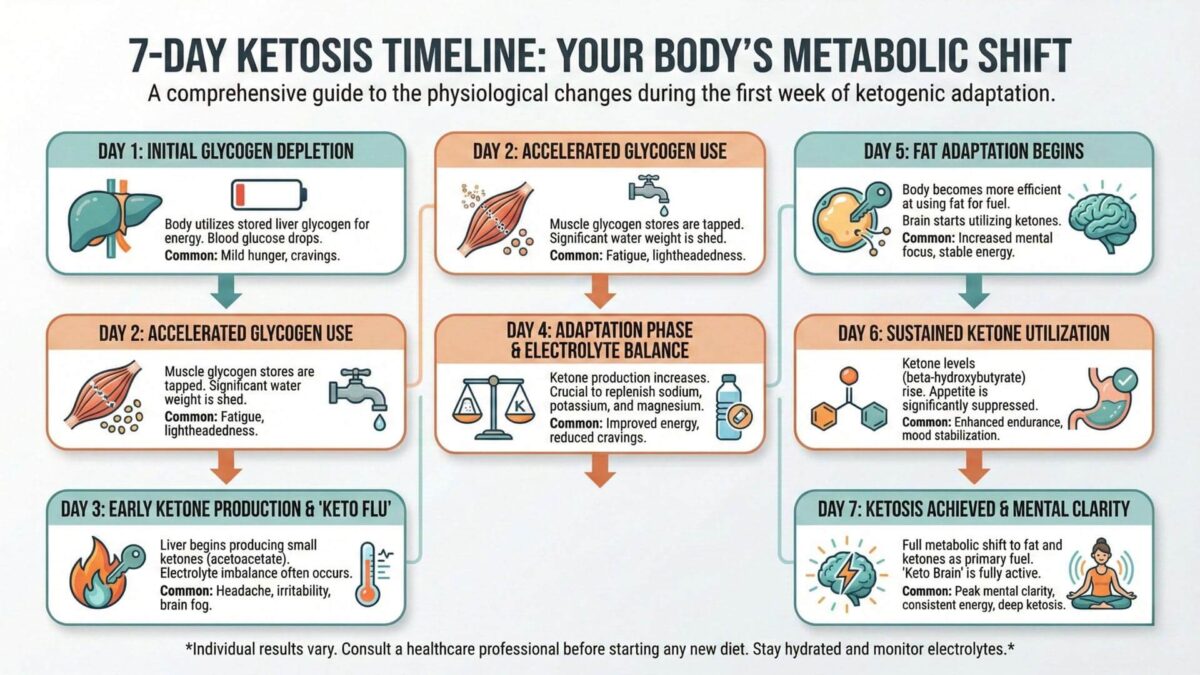
How long to get into ketosis is the most common question from keto beginners – and the answer is encouraging: most people enter ketosis within 2 to 7 days of starting a low-carb, high-fat ketogenic diet. However, your personal timeline depends on several factors including your carbohydrate intake, activity level, previous diet history, and metabolic flexibility. This comprehensive guide breaks down the exact day-by-day progression into ketosis, the signs that indicate you’ve arrived, and the key factors that speed up or slow down the process.
You’ve cut the carbs. You’re eating fat. You’re following the plan.
But when does ketosis actually start?
It’s the question every beginner asks. And it makes sense—you can’t see ketosis happening. You can’t feel the exact moment your body flips the metabolic switch. It’s invisible, gradual, and kind of mysterious.
What you need to know: Most people enter ketosis within 2-7 days of restricting carbs to 20-25 grams per day. Your personal timeline depends on your metabolism, activity level, previous diet, and how strictly you follow the plan.
This guide will walk you through the exact timeline, show you how to recognize the signs, and help you understand what’s happening inside your body at each stage.
No more guessing. Let’s break it down, day by day.
🎁 Want to reach ketosis faster?
Get our FREE 7-Day Keto Kickstart Meal Plan with calculated macros and delicious halal-friendly recipes that guarantee you hit ketosis by Day 7.
We respect your privacy. Unsubscribe anytime.
The Quick Answer: How Long to Get Into Ketosis?
Most people enter ketosis within 2-7 days—but your timeline varies:
Let’s be more specific.
Coming from a standard American diet (high-carb, moderate fat)? Expect the longer end of that range – 5-7 days.
Already eating relatively low-carb, or you’re physically active? you might hit ketosis in 2-4 days.
Doing intermittent fasting alongside keto? You could be in ketosis within 24-48 hours.
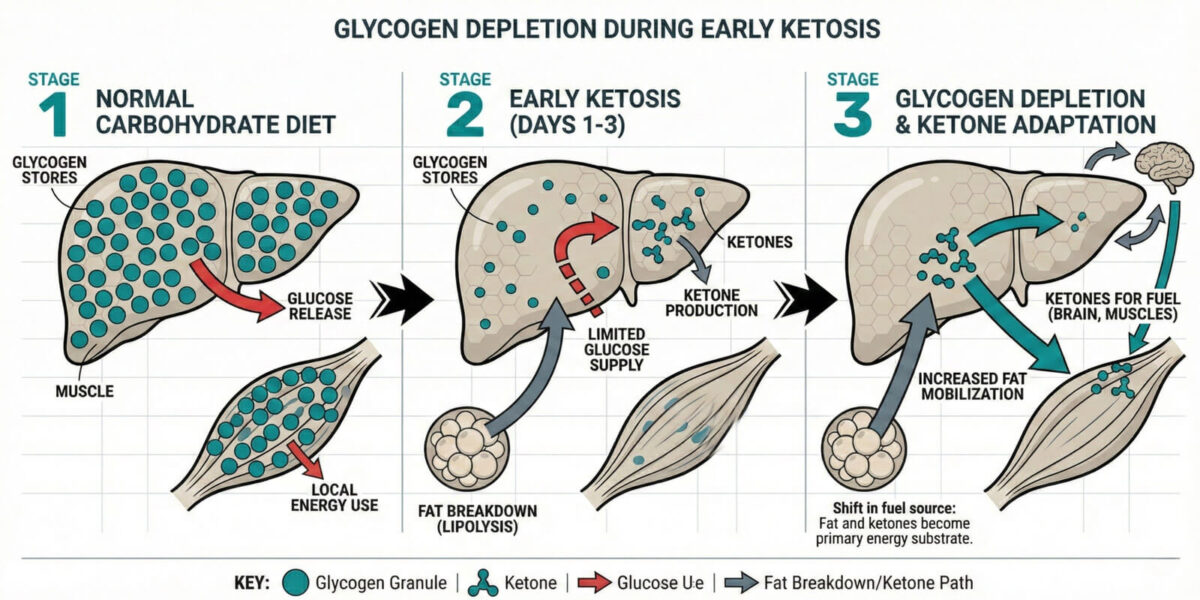
The timeline depends on how quickly your body burns through its stored glucose (glycogen) and switches to producing ketones from fat. Once your liver glycogen is depleted, ketosis begins.
Think of it like this: Your body has a tank of glucose. Ketosis starts when that tank runs empty and your body has to switch fuel sources.
New to keto? Start with our complete beginner’s guide to understand how keto works before diving into the timeline.
Understanding how long to get into ketosis helps set realistic expectations and prevents premature discouragement during your first week.
How Long to Get Into Ketosis: The Complete Timeline (2-7 Days)
Let’s walk through what’s happening inside your body, day by day.
Day 1-2: Glycogen Depletion Begins
Here’s what’s going on inside your body: You’re still running on glucose from your last carb-heavy meal. But now, with no new carbs coming in, your body starts burning through stored glycogen in your liver and muscles.
Common experiences at this stage:
- Increased hunger (your body wants carbs)
- Cravings for bread, pasta, sweets
- Mild fatigue as blood sugar stabilizes
- Possibly irritable (the “carb withdrawal” phase)
Your action plan:
- Stick to 20-25g net carbs
- Eat enough fat and protein to stay satisfied
- Drink plenty of water
- Don’t give up! This is the hardest part.
Where you are: Not in ketosis yet. Your body is still primarily burning glucose.
Day 3-4: The Transition Phase
The metabolic shift begins: Glycogen stores are running very low. Your liver begins ramping up ketone production. You’re in the metabolic “in-between”—not fully glucose-burning, not fully fat-adapted yet.
This is when most people wonder “how long to get into ketosis, really?” The answer: you’re almost there—most people are entering ketosis by the end of Day 4.
Now here’s the thing: this is when many people experience keto flu symptoms.
What you’re likely feeling:
- Brain fog and difficulty concentrating
- Headaches (often from electrolyte imbalance)
- Fatigue and low energy
- Muscle cramps
- Possible nausea
- Sugar cravings intensify before they fade
Critical steps to take now:
- Electrolytes are everything at this point! Add salt to meals, drink bone broth, take magnesium and potassium
- Stay hydrated (2-3 liters of water daily)
- Don’t panic—this passes quickly
- Rest if you need to
Where you are: Entering ketosis. Your body is producing small amounts of ketones, but you’re not fully adapted yet.
Experiencing keto flu? Read our 24-hour keto flu relief guide to eliminate symptoms fast with the right electrolyte protocol.

Day 5-7: Welcome to Ketosis
The breakthrough moment: Liver glycogen is fully depleted. Your liver is now actively converting fat into ketones. Your blood ketone levels rise to 0.5 mmol/L or higher.
Officially, you’re in ketosis.
The shift you’ll notice:
- Sudden increase in energy (often described as feeling “clear” or “light”)
- Mental clarity and sharper focus
- Reduced hunger and fewer cravings
- Possible metallic taste in your mouth (acetone breath)
- Increased urination as your body releases water weight
Keep the momentum going:
- Celebrate! You made it.
- Keep carbs at 20-25g to stay in ketosis
- Continue electrolyte supplementation
- Start noticing how good you feel
Where you are: You’re in! Ketones are your primary fuel source now.

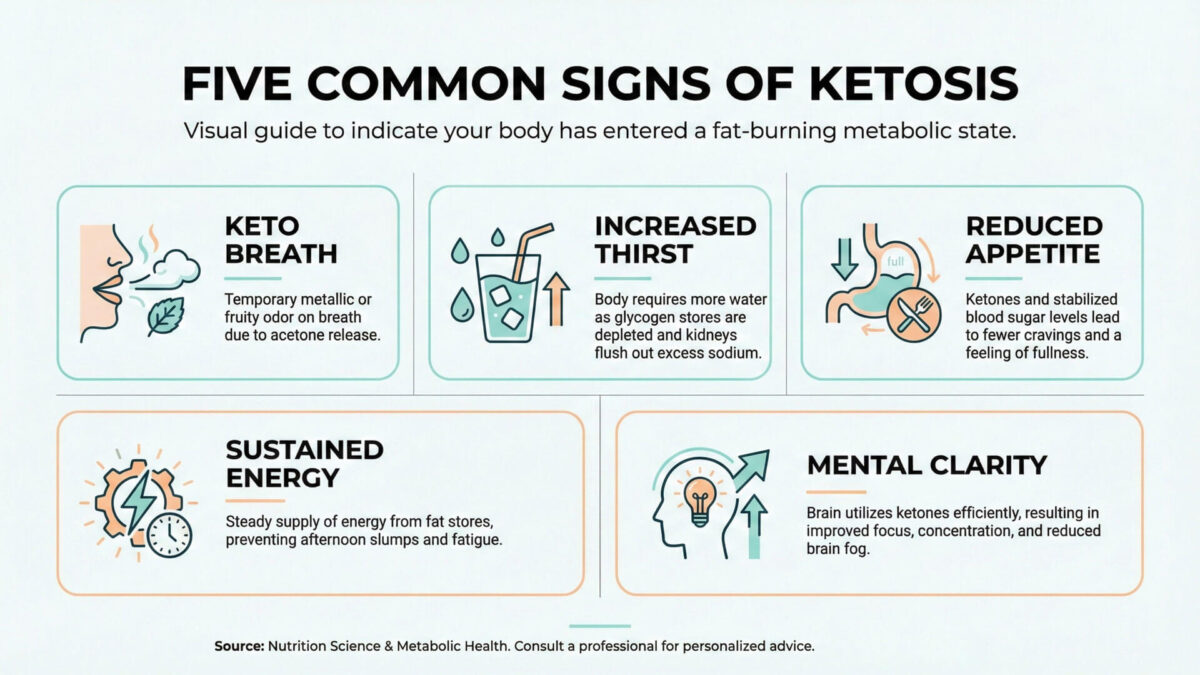
5 Clear Signs You’re in Ketosis (Without Testing)
You don’t need a blood ketone meter to know if you’re in ketosis. Your body gives you clear signals.
1. Your Breath Smells Different (Fruity or Metallic)
This is acetone (a type of ketone) escaping through your breath. Sweet, metallic, fruity—even nail polish-like. Everyone describes it differently.
It’s temporary and fades as your body becomes more efficient at using ketones. But it’s a reliable sign you’re producing them.
Quick Fix: Sugar-free gum, increased water intake, better oral hygiene. I know it’s annoying, but the good news? It will pass.
2. Increased Urination (Especially at First)
When you deplete glycogen, your body releases the water that was stored with it (about 3-4 grams of water per gram of glycogen). This is why you lose several pounds in the first week – it’s mostly water weight.
You’ll notice you’re peeing more frequently, especially in Days 3-7.
Quick Fix: Drink more water and replenish electrolytes. This normalizes after the first week.
3. Reduced Hunger and Cravings
One of the most dramatic signs: Suddenly, you’re not thinking about food every hour.
The constant snack cravings disappear. You might even forget to eat.
This happens because ketones suppress ghrelin (the hunger hormone) and provide steady energy without blood sugar crashes.
What this means: You’re burning fat efficiently. Your body trusts its fuel source.
4. Sustained Energy Without Crashes
No more 3pm energy slump. No need for constant snacking. You wake up alert without needing caffeine immediately.
This stable energy is one of the biggest benefits people report. It’s a sign your brain and body are running efficiently on ketones.
5. Mental Clarity and Focus
Many people describe this as “brain fog lifting.” Thoughts feel sharper. Concentration is easier. Memory improves.
Ketones are actually a preferred fuel source for your brain. This clarity is a direct result of your brain running on ketones instead of glucose.
🎁 Want to guarantee you enter ketosis?
Join our email community and get a FREE Keto Starter Checklist with the exact foods, macros, and meal timing to reach ketosis in 5 days or less.
We respect your privacy. Unsubscribe anytime.
How to Measure Ketosis (If You Want Proof)
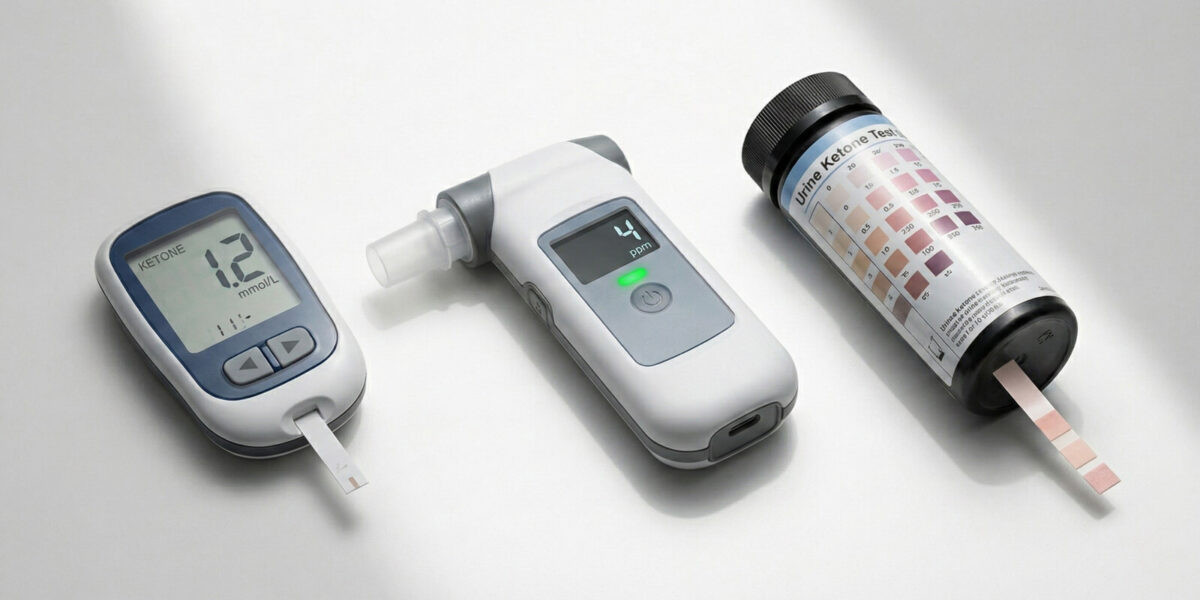
Want hard data? According to Harvard Medical School, there are three primary methods to test for ketosis:
Blood Ketone Meters (Most Accurate)
How it works: Finger prick, test strip, reads blood ketone level in mmol/L.
Ketosis range: 0.5-3.0 mmol/L (optimal for weight loss: 1.5-3.0)
Pros: Most accurate. Measures beta-hydroxybutyrate (the primary ketone).
Cons: Expensive ($1-2 per test strip). Requires finger pricks.
Best for: People who want precise data or are using keto therapeutically.
Breath Ketone Meters (Convenient)
How it works: Blow into the device. It measures acetone in your breath.
Pros: Reusable (one-time purchase). No strips needed. Pain-free.
Cons: Less accurate than blood tests. More expensive upfront ($100-200).
Best for: People who want ongoing monitoring without recurring costs.
Urine Ketone Strips (Least Reliable)
How it works: Pee on a strip. It changes color based on ketones in urine.
Pros: Cheap ($10 for 100 strips). Easy to find at pharmacies.
Cons: Only measures excess ketones your body isn’t using. Becomes less accurate after you’re fat-adapted (shows negative even when you’re in ketosis). False negatives are common.
Best for: Quick initial confirmation in your first week only.
Bottom line: Blood meters are gold standard. Breath meters are convenient. Urine strips work for beginners but stop being reliable after Week 2-3.
What Affects Your Ketosis Timeline? (Why It Varies)
Why does Jane enter ketosis in 3 days while Mark takes 7? Let me break down the factors.
Your Starting Diet
High-carb diet before keto? Expect the full 5-7 days. Your body’s glycogen stores are maxed out, which means you’ve got a lot to burn through before ketosis kicks in.
Already eating low-carb? You’re ahead of the game—2-4 days is realistic since your glycogen tank is already half-empty.
Paleo or primal background? Even better. You could hit ketosis in 2-4 days since your metabolism is already comfortable switching between fuel sources.
Your Activity Level
Sedentary? Ketosis might take longer (5-7 days). You’re not burning through glycogen quickly.
Very active or exercising regularly? Faster entry (2-4 days). Exercise depletes glycogen rapidly.
Pro tip: A single high-intensity workout session can burn through glycogen stores significantly, potentially cutting 1-2 days off your timeline.
Your Carb Intake Accuracy
Strict 20g net carbs daily? You’ll enter ketosis predictably.
Estimating or eating “low-ish” carbs (50-100g)? You might never enter ketosis, or it could take weeks.
Hidden carbs in sauces, dressings, or “low-carb” products? These can delay ketosis significantly.
Accuracy matters. Track everything for the first 2 weeks.
Not sure how to calculate your ideal macros? Use our keto macros calculator to find your personalized carb, protein, and fat targets.
Your Metabolic Health
Metabolically healthy (good insulin sensitivity)? Faster adaptation.
Insulin resistant or prediabetic? May take longer as your body adjusts to using fat.
Previously followed keto? Your body “remembers” metabolic pathways. Re-entry is faster (sometimes 24-48 hours).
Intermittent Fasting
Combining fasting with keto? This is the fastest route to ketosis.
A 16:8 fast (eating only within an 8-hour window) or even a 24-hour fast can accelerate glycogen depletion. Some people hit ketosis in 1-2 days this way.
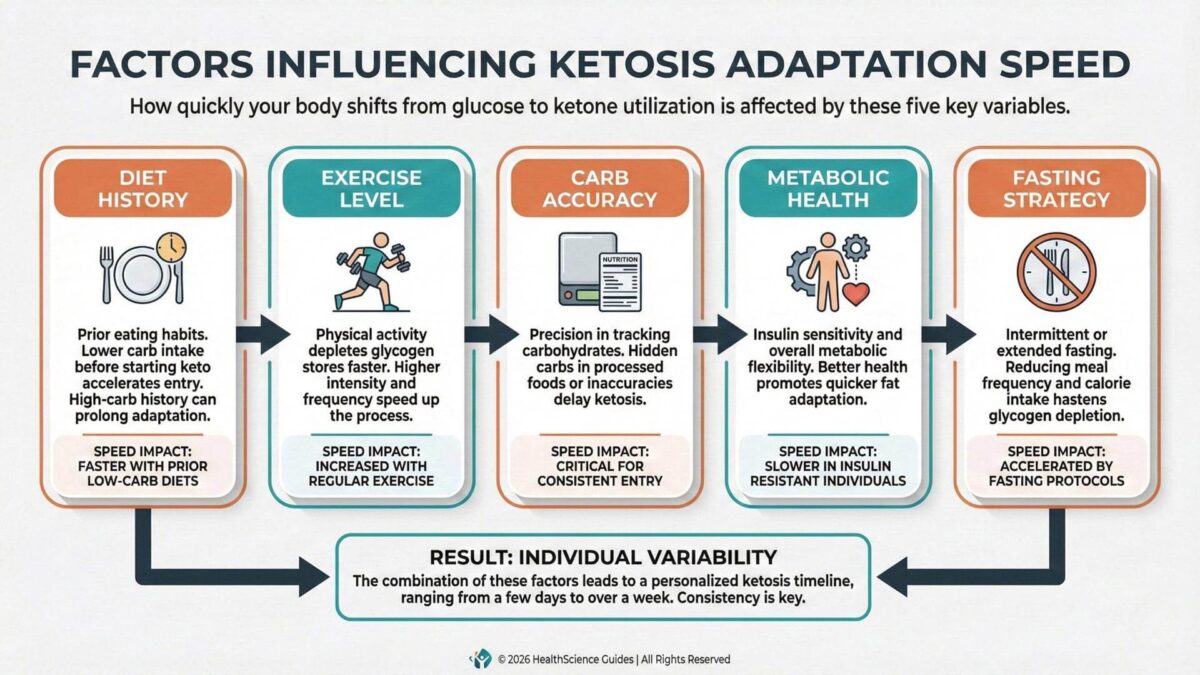
6 Factors That Determine How Long to Get Into Ketosis
These six factors are the primary determinants of how long to get into ketosis for your individual body and situation.
Want to speed things up? Here’s how.
1. Drop Carbs to 20g Net Carbs Immediately
Don’t ease in. Don’t do 50g, then 40g, then 30g.
Go straight to 20g net carbs on Day 1.
The faster you deplete glycogen, the faster you enter ketosis.
2. Increase Healthy Fats Significantly
Your body needs to learn to burn fat. Give it plenty to work with. Add:
- Avocados
- Olive oil
- Coconut oil
- Butter or ghee
- Fatty cuts of meat
Don’t fear fat. It’s your primary fuel now.
3. Exercise to Deplete Glycogen Faster
A single high-intensity workout (HIIT, sprints, heavy lifting) can burn through glycogen stores in one session.
Even a long walk (60-90 minutes) helps. Movement accelerates the process.
4. Try Intermittent Fasting (16:8 or 24-Hour Fast)
Fasting forces your body to use stored fuel (glycogen, then fat). Combined with keto, it’s incredibly effective.
16:8 fasting: Eat within an 8-hour window (e.g., noon to 8pm). Fast for 16 hours.
24-hour fast: Skip dinner one day, eat lunch the next day. This can get you into ketosis within 24-48 hours.
5. Supplement with MCT Oil or Coconut Oil
MCTs (medium-chain triglycerides) are fats that convert directly into ketones. They don’t require the normal fat-digestion process.
Adding 1-2 tablespoons of MCT oil daily can elevate blood ketones even before you’re fully in ketosis. It helps with the transition.
Start slowly: MCT oil can cause digestive upset. Begin with 1 teaspoon and increase gradually.
6. Stay Consistent for 7 Days Minimum
The biggest mistake? Giving up on Day 4 when you feel terrible.
Push through. Days 5-7 are when you feel the magic. If you quit during the hardest part, you’ll never experience the benefits.
Commit to one full week. You can do anything for 7 days.
Need a detailed meal-by-meal plan? Follow our 7-Day Keto Kickstart Guide with every meal planned for your first week.
Note: affiliate link below — I earn a small commission at no extra cost to you and only recommend tools I’d use myself.
🚀 Want to reach ketosis faster — without the guesswork?
The timeline above is the honest answer: for most people, a few days to a week. The single biggest thing that slows it down? Getting your macros wrong without realizing it — a little too much protein, or hidden carbs, and you stall before you ever hit ketosis.
If you’d rather dial your macros in from day one than guess, this free 2-minute quiz works them out for your body and goals, then builds a plan around them. Even just taking it for the personalized numbers is worth the two minutes.
Common Mistakes That Delay Ketosis
Eating Too Much Protein
Yes, it’s possible. Excess protein can convert to glucose through gluconeogenesis, slowing ketosis entry.
Quick Fix: Stick to moderate protein (0.6-1g per pound of lean body mass). Focus on fat as your primary calorie source.
Hidden Carbs in “Keto-Friendly” Products
Sugar-free doesn’t mean carb-free. Many products marketed as “keto” contain maltodextrin, starches, or other hidden carbs.
Quick Fix: Read labels obsessively. If it has more than 3-5g net carbs per serving, skip it for the first two weeks.
Not Tracking Accurately
Eyeballing portions leads to carb creep. A “small” apple? That’s 20g of carbs—your entire daily allowance.
Quick Fix: Use a food scale and tracking app (Cronometer, Carb Manager) for at least the first two weeks.
Giving Up on Day 3-4 (The Hardest Days)
This is when most people quit. You feel awful. You’re tired. You want bread.
But wait – Days 5-7 are completely different. Push through the transition and you’ll understand why people love keto.
What Happens After You Enter Ketosis?
Entering ketosis is just the beginning. Let me show you what’s next.
Weeks 2-4: Fat Adaptation Begins
Ketosis ≠ Fat-adapted.
Ketosis means your body is producing ketones. Fat-adapted means your body is efficiently using them.
Full fat-adaptation takes 3-6 weeks. During this time:
- Energy levels continue improving
- Athletic performance returns (and often improves)
- Hunger decreases further
- Weight loss accelerates
Month 2+: Full Benefits Emerge
By Month 2, you’re fully adapted. This is when people report:
- Sustained mental clarity
- Stable energy all day
- Significant fat loss
- Reduced inflammation
- Better sleep quality
- Improved mood stability
This is the “keto sweet spot.”
Staying in Ketosis Long-Term
Once you’re in, staying in ketosis is easier than getting there.
As long as you keep carbs at 20-30g net daily, you’ll maintain ketosis. Some people can eventually increase to 50g without leaving ketosis (once fully fat-adapted).
Test periodically: Use a blood ketone meter monthly to confirm you’re still in the optimal range.
FAQ: Your Ketosis Timeline Questions Answered
-
How long to get into ketosis if I’m already low-carb?
So, how long to get into ketosis? For most people following standard keto guidelines (20-25g net carbs daily), the answer is 2-7 days, with Day 4-5 being the most common breakthrough point.
-
Can I get into ketosis in 24 hours?
Technically possible if you do a 24-hour fast, but rare. Most people need 2-7 days minimum.
-
Will one cheat meal kick me out of ketosis?
Yes, likely. A high-carb meal (50g+) will replenish glycogen and stop ketone production. You’ll need to start the process over (though re-entry is usually faster, 1-3 days).
-
Do I need to stay in ketosis forever to see benefits?
No. Many people cycle in and out (cyclical keto). But consistent ketosis for at least 3-6 months helps you become fully fat-adapted and see maximum benefits.
-
Why does my ketone meter show low numbers even though I feel great?
Once you’re fat-adapted, your body uses ketones more efficiently. Blood levels may drop (1.0-1.5 mmol/L) even though you’re in deep ketosis. Focus on how you feel, not just the numbers.
-
Can I exercise while entering ketosis?
Yes, but expect reduced performance in Week 1. Your muscles are adapting. By Week 2-3, performance returns. Many athletes report better endurance once fully fat-adapted.
-
How long does full fat adaptation take?
While ketosis begins within 2-7 days, complete fat adaptation takes 3-6 weeks according to metabolic studies. During this period, your body becomes increasingly efficient at using fat for fuel. Most people notice peak performance and energy levels around Week 4-6 of consistent keto adherence.
CONCLUSION: Your Ketosis Timeline Starts Now
Most people enter ketosis within 2-7 days of starting keto.
Your exact timeline depends on your starting diet, activity level, and how strictly you follow the plan. But one thing is universal: The first 3-4 days are the hardest.
Push through. Days 5-7 are when you feel the shift—the mental clarity, the sustained energy, the reduced hunger. That’s when you understand why people say keto is life-changing.
Track your carbs. Supplement electrolytes. Stay consistent.
And remember: The timeline is temporary. The benefits last.
🎁 Ready to start your ketosis journey the right way?
Download our FREE Keto Quickstart Bundle: 7-Day Meal Plan + Shopping List + Electrolyte Guide + Macro Calculator. Everything you need to reach ketosis within 7 days—guaranteed.
We respect your privacy. Unsubscribe anytime.
Share your experience: How long did it take you to enter ketosis? What signs did you notice first? Drop a comment below!


